




Introducción
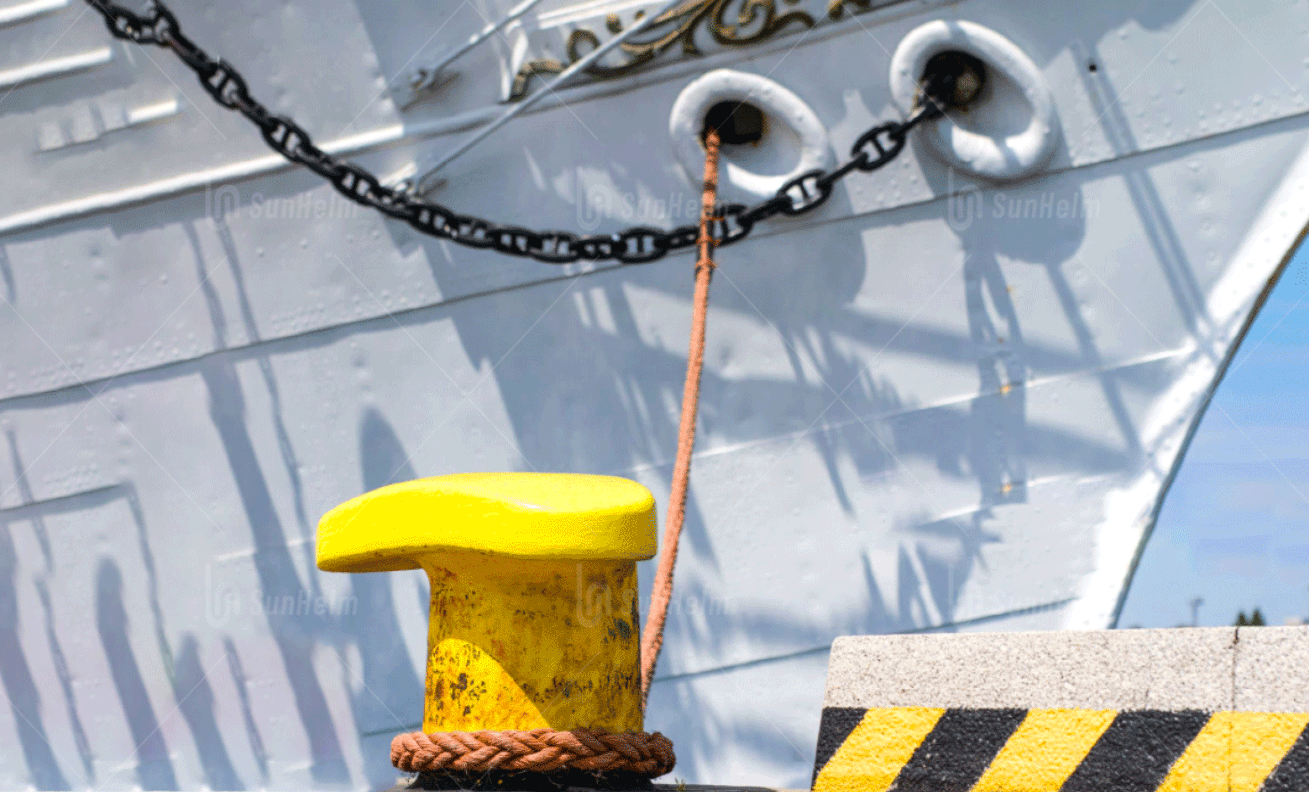
Las defensas de goma desempeñan un papel importante en puertos, muelles y operaciones marítimas. Cuando un buque se aproxima a un muelle, arrastra una gran cantidad de impulso. Sin la protección adecuada, el impacto entre el buque y el muelle puede dañar ambas estructuras.
Las defensas de goma están diseñadas para absorber este impacto. Se comprimen cuando un buque entra en contacto, reduciendo la fuerza de la colisión y protegiendo tanto al buque como al muelle.
Hoy en día se utilizan muchos tipos diferentes de defensas de goma en ingeniería naval. Cada tipo está diseñado para buques, estructuras portuarias y condiciones operativas específicas. Entender estas diferencias puede ayudar a los operadores portuarios a elegir la solución adecuada.
En este artículo, veremos varios tipos comunes de defensas de goma y explicaremos dónde se suelen utilizar.
Funciones principales de las defensas de caucho
Las defensas de goma cumplen varias funciones clave en las operaciones de atraque.
Absorción de energía de atraque
Cuando un buque se aproxima a un muelle, transporta energía cinética debido a su masa y velocidad. Las defensas de goma absorben esta energía mediante compresión elástica, reduciendo la fuerza transferida al muelle.
Protección de buques y estructuras portuarias
Las defensas actúan como amortiguador entre los buques y las estructuras portuarias. Esto ayuda a prevenir daños estructurales en los buques y reduce la tensión en las instalaciones portuarias.
Reducción de los costes de mantenimiento
Al minimizar los daños durante las operaciones de atraque, las defensas de goma ayudan a los puertos a evitar costosas reparaciones y tiempos de inactividad.
Tipos comunes de defensas de goma
Varios tipos de defensas de caucho se utilizan ampliamente en puertos e instalaciones marinas.
Guardabarros cilíndrico
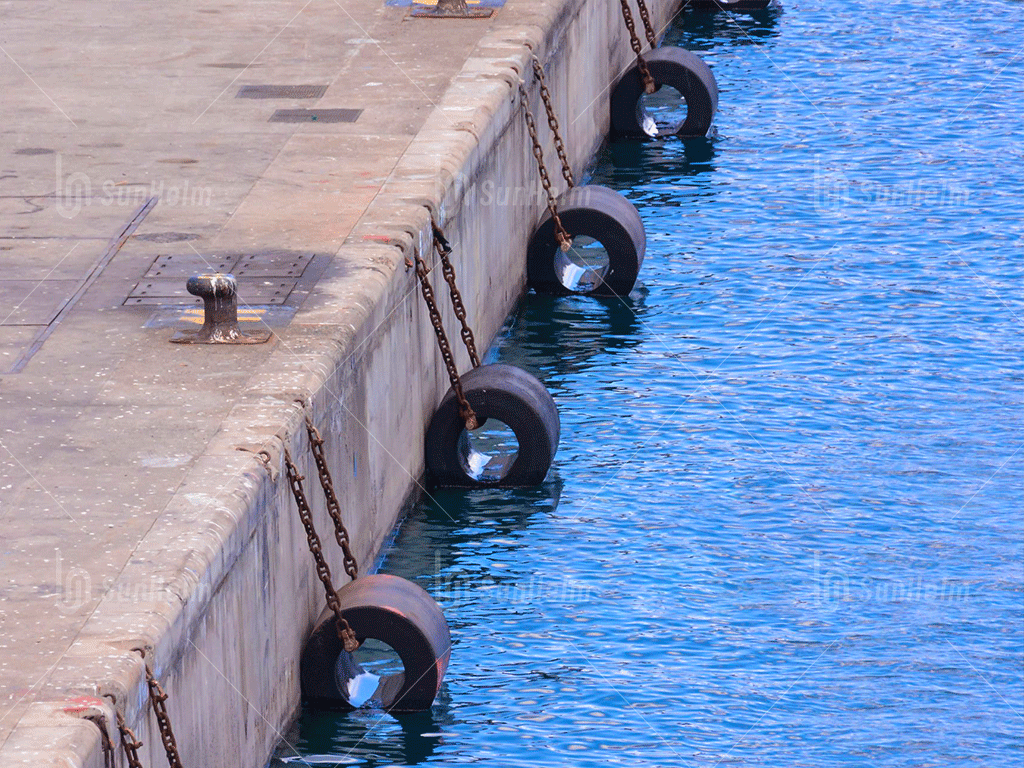
Guardabarros cilíndricos son uno de los tipos de defensas de goma más antiguos y sencillos. Su forma redonda facilita su instalación y mantenimiento.
Estas defensas suelen montarse con cadenas o soportes a lo largo del borde del muelle o en embarcaciones. Por su diseño sencillo, son duraderas y rentables.
Las defensas cilíndricas se suelen utilizar en puertos pesqueros, puertos pequeños y vías navegables interiores.
D guardabarros
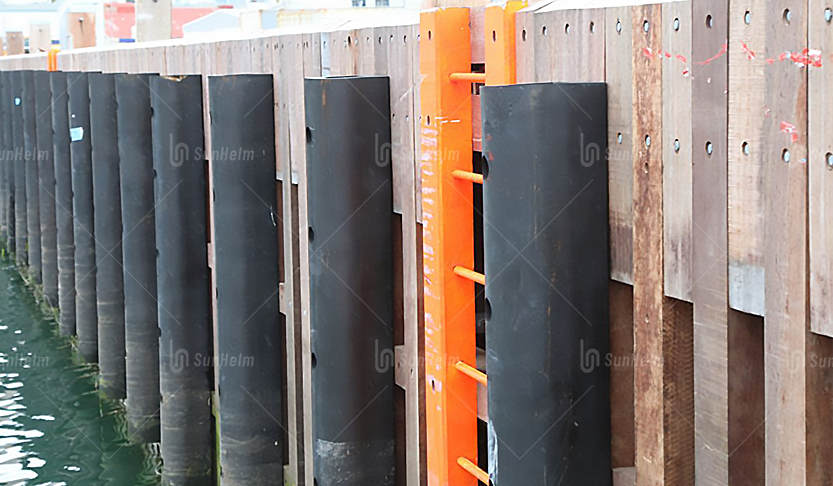
Las defensas D deben su nombre a su sección transversal en forma de “D”. Se utilizan mucho tanto en muelles como en embarcaciones.
Suelen atornillarse directamente al muelle o al costado de una embarcación. Su instalación es sencilla y ofrecen una protección fiable.
Guardabarros D suelen encontrarse en remolcadores, barcos de trabajo y pequeñas zonas de atraque.
Super Arch Fender
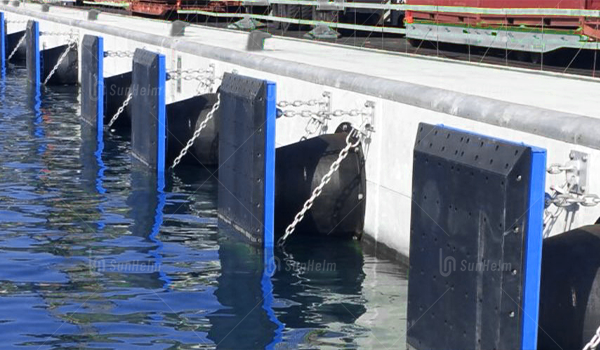
El super arco guardabarros es una versión mejorada del tradicional guardabarros en V. Ofrece una mayor absorción de energía manteniendo baja la fuerza de reacción.
Este tipo de defensa es estable y resistente a las fuerzas cortantes. Suele utilizarse junto con paneles de UHMW-PE para reducir la fricción entre el buque y el muelle.
Las defensas de superarco suelen instalarse en terminales de contenedores y puertos de carga a granel.

Guardabarros de cono
Las defensas cónicas son defensas marinas de alto rendimiento diseñadas para entornos exigentes.
Su forma cónica les permite absorber grandes cantidades de energía manteniendo una baja fuerza de reacción. También funcionan bien incluso cuando los barcos se acercan al muelle en ángulo.
Defensas cónicas se utilizan con frecuencia en grandes terminales de contenedores, terminales petrolíferas y otras instalaciones portuarias de gran tonelaje.
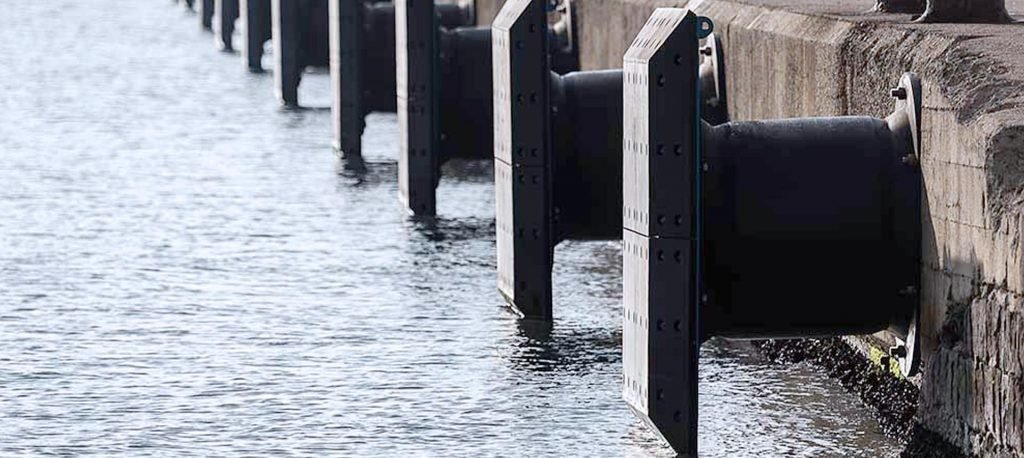
Defensa celular
Defensas celulares se utilizan mucho en los grandes puertos comerciales. Su estructura suele incluir un cuerpo cilíndrico hueco con bridas de montaje.
Proporcionan una absorción de energía muy elevada y son adecuados para grandes buques.
Las defensas celulares suelen utilizarse con paneles de acero y almohadillas de baja fricción para mejorar el rendimiento y proteger los cascos de los buques.
Defensa Neumática
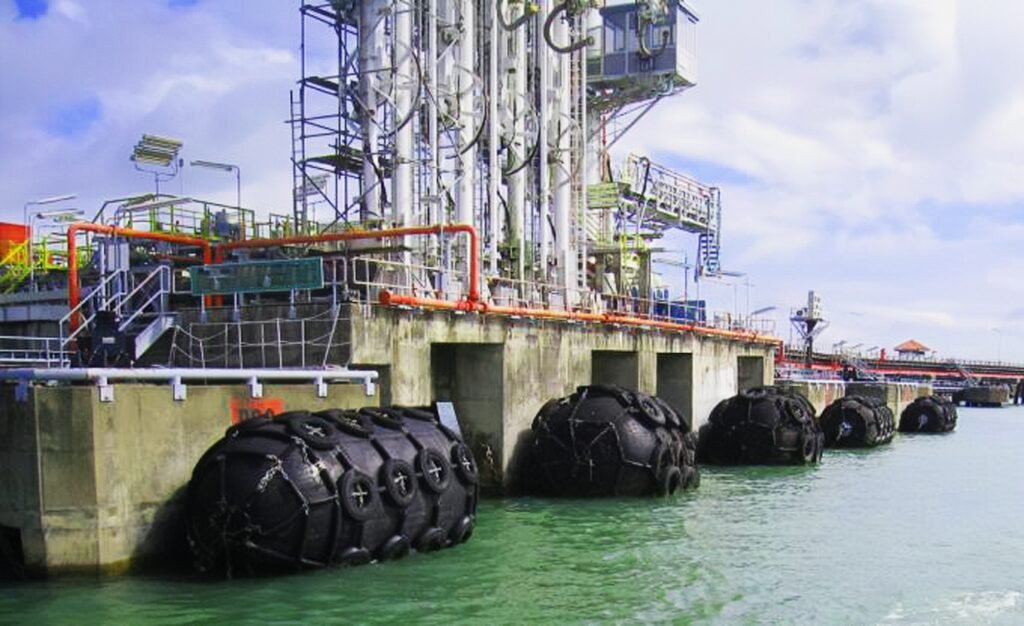
Defensas neumáticas son defensas flotantes rellenas de aire. A diferencia de las defensas de goma fijas, flotan en el agua y se mueven con la marea.
Pueden absorber grandes impactos y ajustarse a diferentes posiciones del buque.
Las defensas neumáticas se utilizan a menudo para transferencias de barco a barco, plataformas en alta mar y operaciones de atraque temporal.
Cómo elegir el guardabarros de goma adecuado
La elección de la defensa adecuada depende de varios factores, como el tamaño del buque, la velocidad de atraque, la estructura del muelle y el espacio de instalación disponible.
He aquí algunos ejemplos típicos que pueden ayudar a orientar el proceso de selección.
Pequeños puertos pesqueros o muelles interiores
Estos lugares suelen servir a pequeñas embarcaciones y barcos de pesca. La energía de atraque es relativamente baja. Las defensas cilíndricas o defensas D suelen ser suficientes y rentables.
Remolcadores y barcos de trabajo
Los remolcadores suelen entrar en contacto con otros buques durante sus operaciones. Por este motivo, se suelen instalar defensas D o cilíndricas a lo largo del casco.
Puertos de carga medianos
Los puertos que manejan graneleros o buques de carga general suelen utilizar defensas en V o defensas de superarco porque proporcionan una protección más sólida y una mejor absorción de la energía.
Grandes terminales de contenedores
Los grandes portacontenedores generan una energía de atraque considerable. Las defensas celulares o cónicas suelen utilizarse junto con paneles frontales para una mayor protección.
Terminales de petróleo y gas
Los requisitos de seguridad son muy elevados en estas instalaciones. Las defensas cónicas o las defensas de celda suelen seleccionarse porque ofrecen un rendimiento fiable y fuerzas de reacción más bajas.
Operaciones de transferencia de buque a buque
Cuando los buques trasladan carga a alta mar, suelen utilizarse defensas neumáticas porque flotan y pueden moverse con los buques.
Conclusión
Las defensas de goma son un elemento esencial de la seguridad portuaria y las operaciones de atraque. Protegen tanto a los buques como a las infraestructuras al absorber la energía producida durante el atraque.
Entre los tipos más comunes de defensas de goma se incluyen las defensas cilíndricas, las defensas en D, las defensas en V, las defensas en superarco, las defensas cónicas, las defensas celulares y las defensas neumáticas.
Cada tipo tiene sus propias ventajas y aplicaciones. La elección de la defensa adecuada depende del tamaño del buque, las condiciones de atraque y el diseño del puerto.
A medida que la infraestructura portuaria siga desarrollándose, la tecnología de las defensas de caucho también seguirá mejorando, proporcionando una protección más segura y fiable para las operaciones marítimas.
Preguntas frecuentes
¿Para qué sirve un guardabarros de goma?
Una defensa de goma absorbe el impacto cuando un buque atraca. Protege tanto al buque como a la estructura del muelle al reducir la fuerza de la colisión.
¿Qué guardabarros de goma es mejor para puertos grandes?
Las defensas celulares y las defensas cónicas suelen utilizarse en grandes puertos porque pueden absorber mucha energía y soportar grandes buques.
¿Qué diferencia a las defensas neumáticas?
Las defensas neumáticas se llenan de aire y flotan en el agua. Esto las hace ideales para traslados de barco a barco y atraques temporales.
¿Cómo elegir la defensa náutica adecuada?
La selección depende del tamaño del buque, la energía de atraque, la estructura del muelle y las condiciones de funcionamiento.
¿Cuánto suelen durar los guardabarros de goma?
Los guardabarros de goma de alta calidad pueden durar entre 10 y 20 años si se instalan y mantienen correctamente.