A huge cargo ship is floating quietly at sea. The ship may weigh tens of thousands of tons. Waves push against it. Wind pulls on its tall structure. Ocean currents slowly move under the hull.
Yet the ship hardly moves.
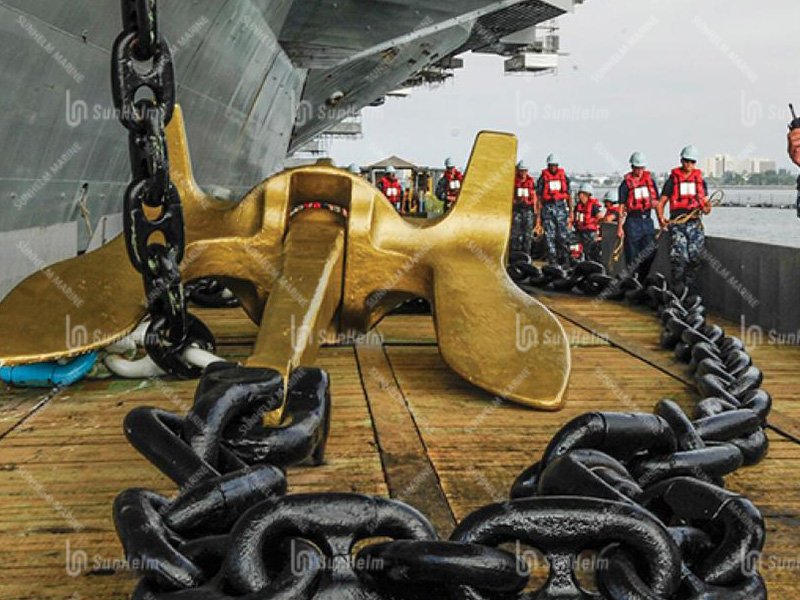
Many people think the jangkar alone keeps the ship in place. It sounds reasonable. A heavy metal anchor drops to the seabed and holds the ship.
But the truth is more interesting.
In real ship anchoring, the anchor is only part of the system. The real hero is the rantai jangkar.
If you understand how an rantai jangkar works, you will better understand bagaimana jangkar bekerja and why a simple chain can hold a giant ship.
The Anchor: Grabbing the Seabed
During ship anchoring, sailors lower the anchor from the bow of the ship. Anchors are made of strong steel. They are shaped to dig into the seabed.
When the anchor reaches the bottom, its flukes dig into the soil. This creates holding power.
The type of seabed matters a lot.
Sebagai contoh:
Sand provides good holding power
Mud allows the anchor to dig deep
Gravel offers moderate holding
Rock makes it hard for anchors to grip
Many people imagine the anchor like a nail in wood. They think the anchor alone holds the ship.
But that is not how anchors work in most situations.
Sebuah rantai jangkar is not a normal chain. It is made of very strong steel. Each link is large and heavy.
When a ship drops anchor, sailors release a long length of chain. The chain does not stay straight. Most of it sinks and rests on the seabed.
This creates a gentle curve in the chain.
Engineers call this shape a catenary curve.
This curved chain performs several important jobs.
First, it absorbs wave energy.
When waves pull the ship, the chain slowly tightens. This reduces sudden shocks.
Second, it lowers the pulling angle.
A curved chain pulls the anchor more horizontally. This helps the anchor stay buried in the seabed.
Third, the chain adds weight and stability.
The heavy chain itself helps resist movement.
Because of this, sailors often say:
The anchor grabs the seabed, but the rantai jangkar stabilizes the ship.
Why Ships Use So Much Anchor Chain
In real ship anchoring, ships release far more chain than the water depth.
Sailors follow a rule called the scope ratio.
The usual rule is simple:
Anchor chain length = 5 to 7 times the water depth.
Sebagai contoh:
If the water is 20 meters deep, the ship may release 100 to 140 meters of anchor chain.
This long chain allows the catenary curve to form properly. Without that curve, the system becomes much less stable.
What Happens If the Chain Is Too Short
A short rantai jangkar can create serious problems.
When strong wind or waves push the ship, a short chain becomes straight very quickly. The curve disappears.
Without that curve:
The shock-absorbing effect disappears
The pulling force goes directly to the anchor
The anchor may be pulled out of the seabed
When this happens, the ship may start drifting. Sailors call this menyeret jangkar.
Dragging anchor can cause collisions or dangerous situations in crowded harbors.
This is why the length of the rantai jangkar is so important.
The Captain Must Always Know the Chain Length
During ship anchoring, the captain and crew must always know how much chain is in the water.
This is critical for safety.
Jika anchor chain is too short, the catenary curve becomes too small. The shock-absorbing effect disappears.
Jika anchor chain is too long, raising the anchor takes too much time. In an emergency, the ship may not be able to move quickly.
So how do sailors know the exact length of chain underwater?
The answer is simple. They read the chain with their eyes.
Anchor chains are divided into sections. Each section is called a shot.
One shot is about 27.5 meters (90 feet) long.
Each connection point between shots has special color markings:
Itu connecting link is painted red
Itu links on both sides are painted white
The number of white links shows the number of shots:
One white link means 1 shot
Two white links mean 2 shots
Three white links mean 3 shots
This system is easy to see even from a distance.
When the chain runs out over the bow, sailors only need one quick look. They can immediately tell how much rantai jangkar is in the water.
It is a simple system, but a very clever one.
What Happens When a Ship Raises the Anchor
When the ship is ready to leave, the crew must raise the anchor.
The process is usually simple.
First, the ship slowly moves toward the anchor. This reduces the load on the chain.
Next, the windlass pulls the rantai jangkar back onto the ship.
As the chain becomes vertical, the anchor starts to move.
Finally, the anchor breaks free from the seabed and comes back on board.
Sometimes the anchor is buried deep in mud. In that case, the ship may move slightly forward to help pull it loose.
Conclusion: The Simple Engineering Behind a Giant Ship
At first glance, a giant ship anchored at sea looks like magic.
How can something so heavy stay still in wind and waves?
The answer is not just the anchor.
It is the combination of the jangkar dan rantai jangkar bekerja sama.
The anchor grips the seabed. Itu rantai jangkar forms a curved line that absorbs energy and stabilizes the ship.
When people ask bagaimana jangkar bekerja, the real story is about the entire ship anchoring system.
Out on the open ocean, a simple chain quietly does one of the most important jobs in maritime engineering.
It keeps massive ships exactly where they need to be.
PERTANYAAN YANG SERING DIAJUKAN
How do anchors actually hold a ship? Anchors dig into the seabed and create holding power. The anchor chain then forms a curved shape on the seabed. This curve absorbs force from waves and wind.
Why do ships release so much anchor chain? Ships usually release five to seven times the water depth in chain. This allows a stable catenary curve to form.
What happens if the anchor chain is too short? A short chain becomes straight. The shock-absorbing effect disappears. The anchor may be pulled out of the seabed.
How do sailors know how much anchor chain is deployed? Anchor chains are divided into sections called shots. Each shot is about 27.5 meters long. Color markings on the chain show how many sections have been released.
Kami menghargai privasi AndaKami menggunakan cookie untuk meningkatkan pengalaman menjelajah Anda, menayangkan iklan atau konten yang dipersonalisasi, dan menganalisis lalu lintas kami dengan mengeklik "Terima Semua", Anda menyetujui penggunaan cookie kami.