

Pendahuluan
The global shipbuilding market is showing a clear shift. Recent data shows that tanker orders are now leading newbuilding activity, especially large vessels like VLCCs and Suezmax tankers.
At first glance, this looks like good news for shipowners. More ships mean more transport capacity. But the real impact will not stay in shipyards. It will move downstream—to ports, terminals, and offshore operations.
So the key question is simple:
What happens when more large tankers enter the global fleet?
1. Tanker Orders Are Rising Again
Recent reports from Lloyd’s List show that tanker newbuilding orders have picked up, with multiple contracts signed in a single week.
This growth is not random. It is driven by:
- Changes in global energy trade routes
- Longer shipping distances
- The need to replace aging fleets
This is not a short-term spike. It is a sign that tanker capacity is expanding again.
2. More Ships, More Pressure on Ports
As more tankers enter service, ports will feel the pressure.
Higher vessel numbers mean:
- More frequent arrivals
- Tighter berth schedules
- Increased waiting times
However, port infrastructure does not grow as fast as ship orders. Expanding a port takes years, while ships can be delivered much faster.
This creates a gap between shipping capacity and port handling ability.
3. Large Tankers Cannot Call at Every Port
Not all tankers are the same. VLCCs and Suezmax vessels are extremely large and require deep water.
Many ports around the world face limitations such as:
- Insufficient water depth
- Restricted turning basins
- Limited berth size
Because of these limits, large tankers often cannot dock directly at their final destination.
This creates a need for alternative solutions.
4. Offshore Transfers Are Becoming More Important
One key solution is Ship-to-Ship (STS) transfer.
In STS operations:
- Cargo is transferred between two vessels
- The operation usually takes place offshore
- It allows large tankers to offload without entering shallow ports
As tanker size and numbers increase, STS operations are expected to grow as well.
In many regions, especially those with limited port capacity, STS is no longer optional—it is essential.
5. Higher Activity Means Higher Risk
Whether at ports or offshore, more operations bring more risk.
Common risks include:
- Vessel collision during berthing
- Hull damage during STS operations
- Weather-related movement
- Human error during handling
As activity increases, these risks do not grow slowly—they can rise quickly.
This makes safety systems more important than ever.
6. Why Marine Fenders Are Becoming Critical
As operations become more frequent and complex, protective equipment plays a bigger role.
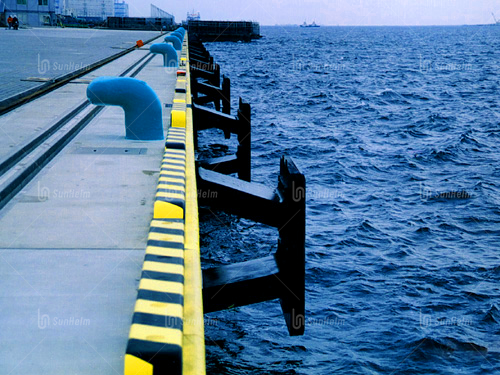
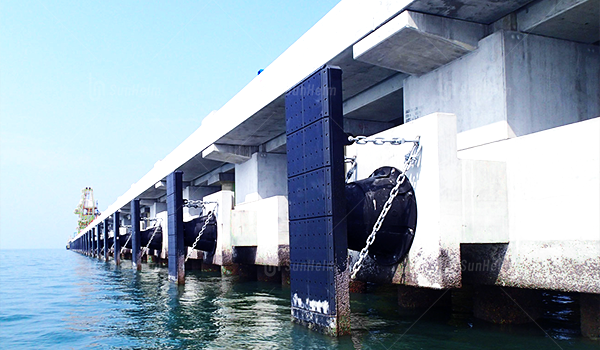
6.1 Port Operations: Rubber Fenders
At ports, fender karet are used to:
- Absorb impact during berthing
- Protect quay walls and ship hulls
- Reduce structural damage
With higher traffic, fenders are under more stress and must perform reliably over time.
6.2 STS Operations: Pneumatic Fenders
In offshore transfers, fender pneumatik are essential.
They are used between vessels to:
- Prevent direct hull contact
- Absorb movement caused by waves
- Adapt to different ship sizes
For tanker operations, especially involving large vessels, pneumatic fenders are a key safety component.
As tanker numbers grow, fenders are no longer just standard equipment—they become critical to safe operations.
7. A Shift in Industry Focus
The shipping industry often focuses on shipbuilding and fleet expansion. But this is only part of the picture.
As capacity grows, attention must also shift to:
- Port infrastructure upgrades
- Offshore operation safety
- Reliable protective systems
In other words, investment is moving beyond ships to the systems that support them.
Kesimpulan
The rise in tanker newbuilding orders is an important signal for the industry. It shows confidence in future demand and global trade.
But the impact does not stop at shipyards.
More tankers will mean:
- Greater pressure on ports
- Increased reliance on offshore transfers
- Higher safety risks during operations
Operators who prepare early—by improving infrastructure and safety systems—will be better positioned to handle this growth.
PERTANYAAN YANG SERING DIAJUKAN
What is a tanker newbuilding boom?
It refers to a period when many new tanker ships are ordered and built, increasing global transport capacity.
Why are VLCCs difficult for ports to handle?
VLCCs are very large and require deep water and large berths, which many ports do not have.
What is STS (Ship-to-Ship) transfer?
STS transfer is the process of moving cargo between two ships, usually offshore, without using a port.
Why are pneumatic fenders important in STS operations?
They act as a buffer between vessels, preventing damage and ensuring safe cargo transfer.