

Umschlagoperationen von Schiff zu Schiff (STS) sind in der Öl- und Gasindustrie üblich. Dabei fahren zwei große Schiffe nebeneinander her, um Fracht umzuladen. Dieser Prozess verbessert zwar die Effizienz, bringt aber auch Sicherheitsprobleme mit sich.
Wellen, Strömungen, Wind und Schiffsbewegungen können dazu führen, dass sich Schiffe unerwartet bewegen. Ohne angemessenen Schutz kann selbst ein kleiner Aufprall zwischen Schiffen die Rumpfstruktur beschädigen, den Ladungstransfer unterbrechen und ernsthafte Sicherheitsrisiken schaffen.
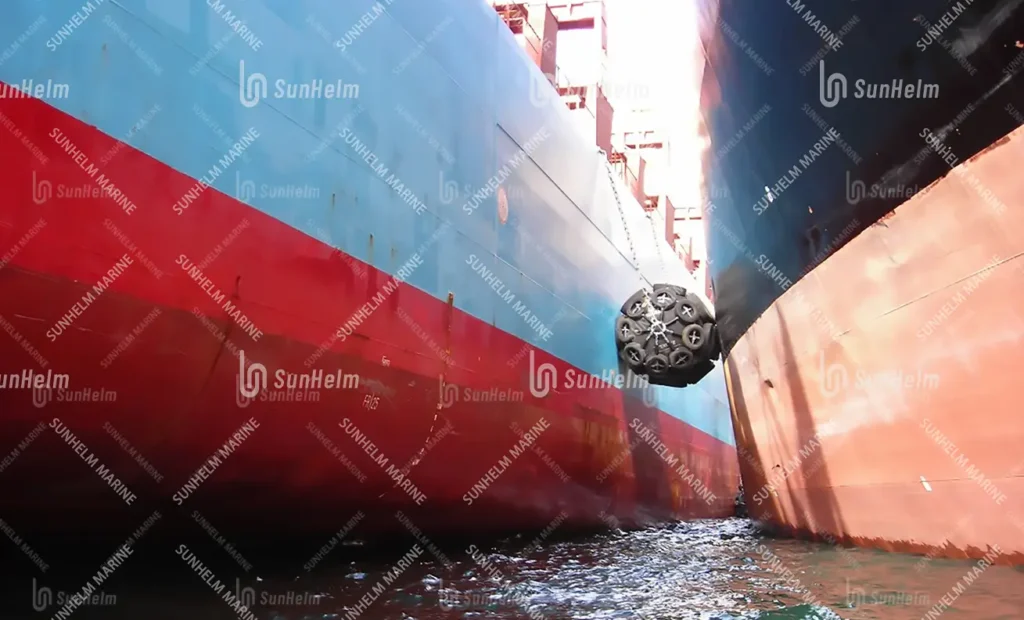
In dieser Fallstudie wird erläutert, wie ein Betreiber eines Offshore-Tankers die Sicherheit bei STS-Operationen durch die Installation von pneumatische Fender und verringert das Kollisionsrisiko erheblich.
Die Herausforderung: Häufiger Schiffskontakt bei STS-Einsätzen
Der Kunde betreibt mehrere Aframax-Tanker, die regelmäßig Offshore-STS-Transfers durchführen.
Vor der Aufrüstung seines Anlegesystems stand der Betreiber vor mehreren Herausforderungen:
- Schiffsbewegungen bei rauem Wetter
- Hoher Druck auf Kontaktstellen zwischen Schiffen
- Erhöhtes Risiko von Schäden am Schiffskörper
- Häufige Sicherheitsinspektionen
- Betriebsbedingte Verzögerungen beim Frachttransfer
Das Problem verschärfte sich bei Nachteinsätzen und in Zeiten starken Windes. Die Besatzungsmitglieder mussten den Abstand zum Schiff genau überwachen und die Festmacherleinen ständig anpassen.
Obwohl sich kein schwerer Unfall ereignet hatte, erkannte der Betreiber, dass das Risiko mit zunehmendem Umschlagvolumen anstieg.
Das Unternehmen beschloss, eine sicherere und zuverlässigere Lösung zu finden.
Verständnis der Sicherheitsrisiken
Risiko 1: Kontakt von Schiffskörper zu Schiffskörper
Wenn sich zwei große Tanker unabhängig voneinander in Wellen bewegen, können sie näher zusammendriften.
Ohne ausreichende Energieabsorption können die Gefäße in direkten Kontakt kommen.
Dies kann dazu führen:
- Beschädigte Stahlplatten
- Verkratzte Schutzschichten
- Lokale strukturelle Verformung
- Teure Reparaturarbeiten
Selbst kleinere Schäden können Inspektionen erfordern, bevor das Schiff wieder in Betrieb genommen wird.
Risiko 2: Unterbrechungen des Frachttransfers
Jedes ungeplante Kontaktereignis kann den Betrieb verlangsamen.
Wenn die Besatzung einen Schaden vermutet, muss sie dies möglicherweise tun:
- Ladungstransfer unterbrechen
- Betroffene Bereiche inspizieren
- Schiffe neu positionieren
- Zusätzliche Genehmigungen einholen
Diese Unterbrechungen erhöhen die Betriebskosten und verringern die Effizienz.
Risiko 3: Umweltbelange
Bei Öltankern ist die Sicherheit eng mit dem Umweltschutz verbunden.
Jede strukturelle Beschädigung erhöht die Wahrscheinlichkeit, dass:
- Ölaustritt
- Vorfälle von Umweltverschmutzung
- Ordnungsrechtliche Sanktionen
- Reputationsschaden
Die Vermeidung von Schiffskontakt ist daher ein wichtiger Teil des Umweltrisikomanagements.
Risiko 4: Sicherheit der Besatzung
Während der Anlege- und Umladevorgänge arbeiten die Besatzungsmitglieder an Deck und überwachen die Ausrüstung und die Festmacher.
Plötzliche Schiffsbewegungen können zu gefährlichen Situationen führen.
Die Verringerung der Aufprallkräfte zwischen den Schiffen trägt zu einer sichereren Arbeitsumgebung für alle Beteiligten bei.
Warum sich der Kunde für pneumatische Fender entschied
Nach der Evaluierung mehrerer Optionen entschied sich der Betreiber für pneumatische Fender für das Projekt.
Die gewählte Lösung umfasste:
- Durchmesser: 3,3 Meter
- Länge: 6,5 Meter
- Anfangsdruck: 80 kPa
- Ketten- und Reifennetz (CTN) Schutz
Diese Entscheidung beruhte auf mehreren wesentlichen Vorteilen.
Hervorragende Energieabsorption
Pneumatische Fender verwenden Druckluft, um die Anlegeenergie zu absorbieren.
Anstatt die Aufprallkräfte direkt auf den Schiffsrumpf zu übertragen, absorbiert und verteilt der Fender die Energie.
Dies trägt dazu bei, die Belastung beider Gefäße zu verringern.
Niedrige Reaktionskraft
Ein hochwertiger pneumatischer Fender kann große Mengen an Energie absorbieren, während die Reaktionskraft relativ gering bleibt.
Dies ist besonders wichtig bei STS-Operationen, da es die Schiffsstrukturen vor übermäßigem Druck schützt.
Anpassungsfähigkeit an Gezeiten und Schiffsbewegungen
Im Gegensatz zu festen Liegeplatzfendern schwimmen die pneumatischen Fender auf dem Wasser.
Sie passen sich automatisch an:
- Wechselnde Gezeitenstände
- Verschiedene Gefäßgrößen
- Bewegung des Schiffes während des Transfers
Diese Flexibilität macht sie ideal für Offshore-Einsätze.
Bewährte Zuverlässigkeit
Pneumatische Fender werden häufig verwendet für:
- Öltankschiffe
- LNG-Tanker
- LPG-Schiffe
- FPSOs
- Offshore-Plattformen
Die Technologie wurde in anspruchsvollen Meeresumgebungen auf der ganzen Welt getestet.
Installation und Einsatz
Das Projektteam entwickelte einen detaillierten Einsatzplan, bevor der Betrieb aufgenommen wurde.
Zunächst wurde jeder pneumatische Fender überprüft und auf den erforderlichen Druck aufgepumpt.
Als Nächstes wurde das Ketten- und Reifennetz-Schutzsystem überprüft, um sicherzustellen, dass es wiederholtem Kontakt standhält.
Die Fender wurden dann entlang der erwarteten Berührungsfläche zwischen den beiden Schiffen positioniert.
Zusätzliche Fender wurden am Bug und am Heck angebracht, um den Schutz zu verbessern.
Vor jedem Transfer führte die Besatzung Routineinspektionen des Druckniveaus, der Ketten, der Schäkel und der Netzsysteme durch.
Diese Vorbereitung trug dazu bei, eine gleichmäßige Leistung während des gesamten Projekts zu gewährleisten.
Ergebnisse nach dem Einsatz
Verringerung des Kollisionsrisikos um ca. 80%
Nach der Installation der pneumatischen Fender führte der Betreiber eine interne Risikobewertung durch.
Die Bewertung ergab, dass die Wahrscheinlichkeit einer direkten Berührung des Schiffskörpers im Vergleich zu früheren Einsätzen um etwa 80% verringert wurde.
Die Ermäßigung stammt von:
- Erhöhter Trennungsabstand
- Bessere Energieabsorption
- Verbesserter Schutz der Schiffe
- Stabilere Anlegebedingungen
Keine strukturellen Schäden während des Projekts
Während der gesamten Dauer der Operation:
- Es wurden keine Schäden am Rumpf gemeldet.
- Es wurden keine Schäden an der Beschichtung festgestellt.
- Es waren keine Reparaturarbeiten erforderlich.
Die Schiffe haben die Überführung ohne strukturelle Zwischenfälle abgeschlossen.
Verbesserte Sicherheit der Besatzung
Die Besatzungsmitglieder berichteten über eine stabilere Positionierung des Schiffes während der Umladearbeiten.
Das Ergebnis ist:
- Es waren weniger Anpassungen der Verankerung erforderlich
- Deckarbeiten wurden einfacher
- Verringerung der Arbeitsbelastung bei der Sicherheitsüberwachung
Dies schuf eine sicherere Umgebung für das an Bord arbeitende Personal.
Höhere Betriebseffizienz
Der Betreiber hat auch betriebliche Vorteile festgestellt.
Im Vergleich zu früheren Projekten:
- Es waren weniger Inspektionen erforderlich
- Es traten weniger Übertragungsunterbrechungen auf
- Ausfallzeiten wurden reduziert
Diese Verbesserungen trugen zur Steigerung der Gesamtproduktivität bei.
Warum sich immer mehr Betreiber für pneumatische Fender entscheiden
Da die Schiffe immer größer werden, benötigen die Betreiber zuverlässige Schutzsysteme, die mit einer höheren Anlegeenergie umgehen können.
Pneumatische Fender bieten mehrere Vorteile:
- Hohe Energieabsorption
- Geringe Reaktionskraft
- Lange Lebensdauer
- Einfache Installation
- Anpassungsfähigkeit an Offshore-Bedingungen
- Einhaltung der internationalen Normen
Für viele Betreiber von Tankschiffen machen diese Vorteile die pneumatischen Fender zu einer der praktischsten Lösungen, die es gibt.
Könnte Ihr Unternehmen ähnlichen Risiken ausgesetzt sein?
Viele Betreiber stehen vor den gleichen Herausforderungen wie dieser Kunde.
Sie können von pneumatischen Fängern profitieren, wenn Sie in Ihrem Betrieb tätig sind:
- Schiff-zu-Schiff-Transfers
- Öltankschiffe
- LNG-Tanker
- Offshore-Terminals
- FPSOs
- Umschlag von hochwertigen Gütern
- Raue Wetterbedingungen
Die Wahl der richtigen Fendergröße und -konfiguration kann die Sicherheit erheblich verbessern und Betriebsrisiken verringern.
Abschließende Überlegungen
Für diesen Betreiber eines Offshore-Tankers boten die pneumatischen Fender mehr als nur einen einfachen Schiffsschutz.
Sie trugen dazu bei, das Kollisionsrisiko zu verringern, die Sicherheit der Besatzung zu verbessern, mögliche Schäden zu verhindern und einen reibungsloseren Betrieb zu ermöglichen.
Da die Offshore-Transferaktivitäten weiter zunehmen, werden Investitionen in zuverlässige Fendersysteme immer wichtiger.
Eine richtig konzipierte pneumatische Fenderlösung kann Schiffe, Besatzungen, Ladung und die Umwelt schützen und den Betreibern helfen, einen effizienten und sicheren Betrieb aufrechtzuerhalten.