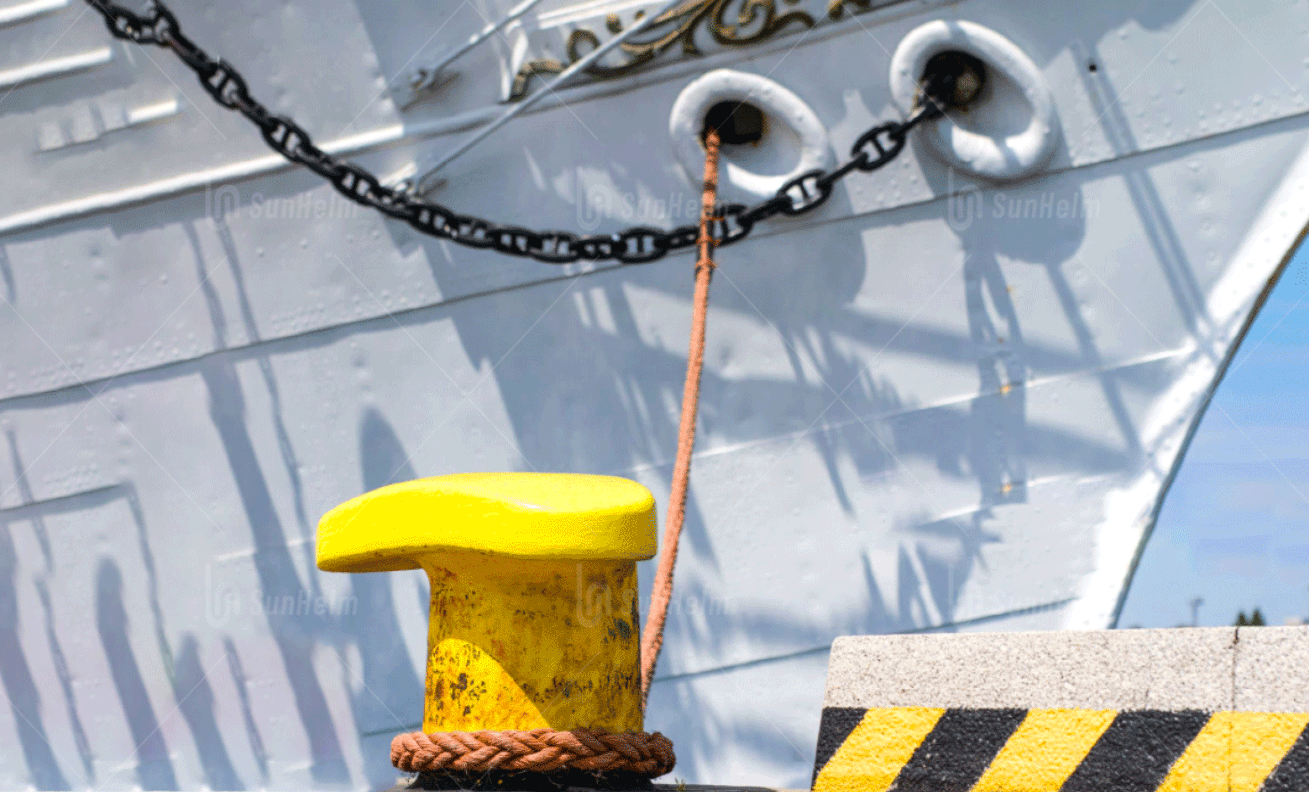
Un énorme cargo flotte tranquillement en mer. Le navire peut peser des dizaines de milliers de tonnes. Les vagues poussent contre lui. Le vent tire sur sa haute structure. Les courants marins se déplacent lentement sous la coque.
Pourtant, le navire ne bouge pratiquement pas.
Nombreux sont ceux qui pensent que la ancre seule maintient le navire en place. Cela semble raisonnable. Une lourde ancre métallique tombe sur le fond marin et retient le navire.
Mais la vérité est plus intéressante.
En réalité ancrage du navire, L'ancre n'est qu'une partie du système. Le véritable héros est le chaîne d'ancrage.
Si vous comprenez comment un chaîne d'ancrage fonctionne, vous comprendrez mieux le fonctionnement des ancres et pourquoi une simple chaîne peut retenir un navire géant.
L'ancre : S'emparer des fonds marins
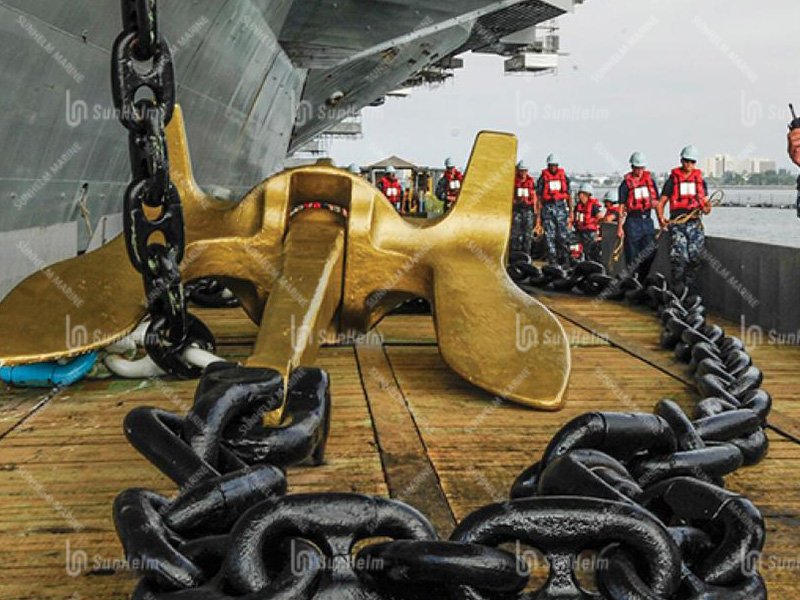
Pendant ancrage du navire, Les marins descendent l'ancre depuis la proue du navire. Les ancres sont faites d'acier solide. Elles ont une forme qui leur permet de s'enfoncer dans le fond marin.
Lorsque l'ancre atteint le fond, ses pattes s'enfoncent dans le sol. C'est ce qui donne à l'ancre sa force de maintien.
Le type de fond marin a une grande importance.
Par exemple :
Sable offre un bon pouvoir de rétention
Boue permet à l'ancre de s'enfoncer profondément
Gravier offre une tenue modérée
Le rocher rend difficile l'adhérence des ancres
Beaucoup de gens imaginent l'ancre comme un clou dans du bois. Ils pensent que l'ancre seule tient le navire.
Mais ce n'est pas ainsi que les ancres fonctionnent dans la plupart des situations.
La chaîne d'ancrage : Le travailleur caché sous l'eau
Un chaîne d'ancrage n'est pas une chaîne normale. Elle est fabriquée en acier très solide. Chaque maillon est grand et lourd.
Lorsqu'un navire jette l'ancre, les marins libèrent une longue chaîne. La chaîne ne reste pas droite. La plus grande partie s'enfonce et repose sur le fond marin.
Cela crée une courbe douce dans la chaîne.
Les ingénieurs appellent cette forme courbe caténaire.
Cette chaîne courbe remplit plusieurs fonctions importantes.
Tout d'abord, il absorbe l'énergie des vagues.
Lorsque les vagues tirent le navire, la chaîne se resserre lentement. Cela réduit les chocs soudains.
Deuxièmement, il réduit l'angle de traction.
Une chaîne courbée tire l'ancre plus horizontalement. Cela permet à l'ancre de rester enfouie dans le fond marin.
Troisièmement, la chaîne ajoute du poids et de la stabilité.
La chaîne lourde elle-même aide à résister aux mouvements.
C'est pourquoi les marins disent souvent :
L'ancre s'accroche au fond de la mer, mais la chaîne d'ancrage stabilise le navire.
Pourquoi les navires utilisent-ils autant de chaînes d'ancre ?
En réalité ancrage du navire, Les navires libèrent beaucoup plus de chaînes que la profondeur de l'eau.
Les marins suivent une règle appelée ratio d'étendue.
La règle habituelle est simple :
Longueur de la chaîne d'ancre = 5 à 7 fois la profondeur de l'eau.
Par exemple :
Si l'eau est 20 mètres de profondeur, le navire peut libérer 100 à 140 mètres de chaîne d'ancre.
Cette longue chaîne permet à la courbe de la caténaire de se former correctement. Sans cette courbe, le système devient beaucoup moins stable.
Ce qui se passe si la chaîne est trop courte
Une courte durée chaîne d'ancrage peut créer de graves problèmes.
Lorsqu'un vent fort ou des vagues poussent le navire, une chaîne courte devient très rapidement droite. La courbe disparaît.
Sans cette courbe :
L'effet d'absorption des chocs disparaît
La force de traction va directement à l'ancrage
L'ancre peut être arrachée du fond marin
Lorsque cela se produit, le navire peut commencer à dériver. Les marins appellent cela ancre traînante.
L'ancre traînante peut provoquer des collisions ou des situations dangereuses dans les ports encombrés.
C'est pourquoi la longueur du chaîne d'ancrage est si importante.
Le capitaine doit toujours connaître la longueur de la chaîne
Pendant ancrage du navire, Le capitaine et l'équipage doivent toujours savoir quelle quantité de chaîne se trouve dans l'eau.
C'est essentiel pour la sécurité.
Si le la chaîne d'ancrage est trop courte, la courbe de la caténaire devient trop petite. L'effet d'absorption des chocs disparaît.
Si le la chaîne d'ancrage est trop longue, En cas d'urgence, lever l'ancre prend trop de temps. En cas d'urgence, le navire peut ne pas être en mesure de se déplacer rapidement.
Comment les marins peuvent-ils connaître la longueur exacte d'une chaîne sous l'eau ?
La réponse est simple. Ils lisent la chaîne avec leurs yeux.
Les chaînes d'ancrage sont divisées en sections. Chaque section est appelée tir.
Une prise de vue, c'est environ 27,5 mètres (90 pieds) longue.
Chaque point de connexion entre les tirs est marqué d'une couleur spéciale :
le le lien de connexion est peint en rouge
le les liens des deux côtés sont peints en blanc
Le nombre de liens blancs indique le nombre de tirs :
Un lien blanc signifie 1 coup
Deux liens blancs signifient 2 tirs
Trois liens blancs signifient 3 tirs
Ce système est facilement visible, même à distance.
Lorsque la chaîne dépasse de l'étrave, les marins n'ont qu'à jeter un coup d'œil rapide. Ils peuvent immédiatement déterminer la quantité de chaîne d'ancrage est dans l'eau.
Il s'agit d'un système simple, mais très intelligent.
Que se passe-t-il lorsqu'un navire lève l'ancre ?
Lorsque le navire est prêt à partir, l'équipage doit lever l'ancre.
La procédure est généralement simple.
Tout d'abord, le navire se rapproche lentement de l'ancre. Cela réduit la charge sur la chaîne.
Ensuite, le guindeau tire le chaîne d'ancrage à bord du navire.
Lorsque la chaîne devient verticale, l'ancre commence à se déplacer.
Enfin, l'ancre se détache du fond marin et revient à bord.
Il arrive que l'ancre soit profondément enfouie dans la vase. Dans ce cas, le navire peut se déplacer légèrement vers l'avant pour aider à la dégager.
Conclusion : L'ingénierie simple d'un navire géant
À première vue, un navire géant ancré en mer semble magique.
Comment un objet aussi lourd peut-il rester immobile dans le vent et les vagues ?
La réponse n'est pas seulement l'ancre.
Il s'agit de la combinaison des ancre et le chaîne d'ancrage travailler ensemble.
L'ancre s'accroche au fond de la mer. le chaîne d'ancrage forme une ligne courbe qui absorbe l'énergie et stabilise le navire.
Lorsque les gens demandent le fonctionnement des ancres, La véritable histoire est celle de l'ensemble de la système d'ancrage des navires.
En haute mer, une simple chaîne accomplit tranquillement l'une des tâches les plus importantes du génie maritime.
Il permet de maintenir les navires massifs exactement à l'endroit où ils doivent se trouver.
FAQ
Comment les ancres retiennent-elles réellement un navire ? Les ancres s'enfoncent dans le fond marin et créent une force de maintien. La chaîne d'ancrage forme ensuite une courbe sur le fond marin. Cette courbe absorbe la force des vagues et du vent.
Pourquoi les navires larguent-ils autant de chaînes d'ancre ? Les navires libèrent généralement cinq à sept fois la profondeur de l'eau dans la chaîne. Cela permet la formation d'une courbe caténaire stable.
Que se passe-t-il si la chaîne de l'ancre est trop courte ? Une chaîne courte devient droite. L'effet d'absorption des chocs disparaît. L'ancre peut être arrachée du fond marin.
Comment les marins savent-ils quelle quantité de chaîne d'ancre est déployée ? Les chaînes d'ancrage sont divisées en sections appelées "coups". Chaque coup mesure environ 27,5 mètres de long. Des marques de couleur sur la chaîne indiquent combien de sections ont été libérées.