




Floating pneumatic rubber fenders play a vital role in modern marine operations. They are designed to absorb impact energy and protect both vessels and port structures during berthing or ship-to-ship transfers. Because they float on the water surface, they automatically adjust to tidal changes and vessel movement. This guide explains what floating pneumatic rubber fenders are, the key specifications you should know, and practical tips for selection, installation, and maintenance.
What Are Floating Pneumatic Rubber Fenders?
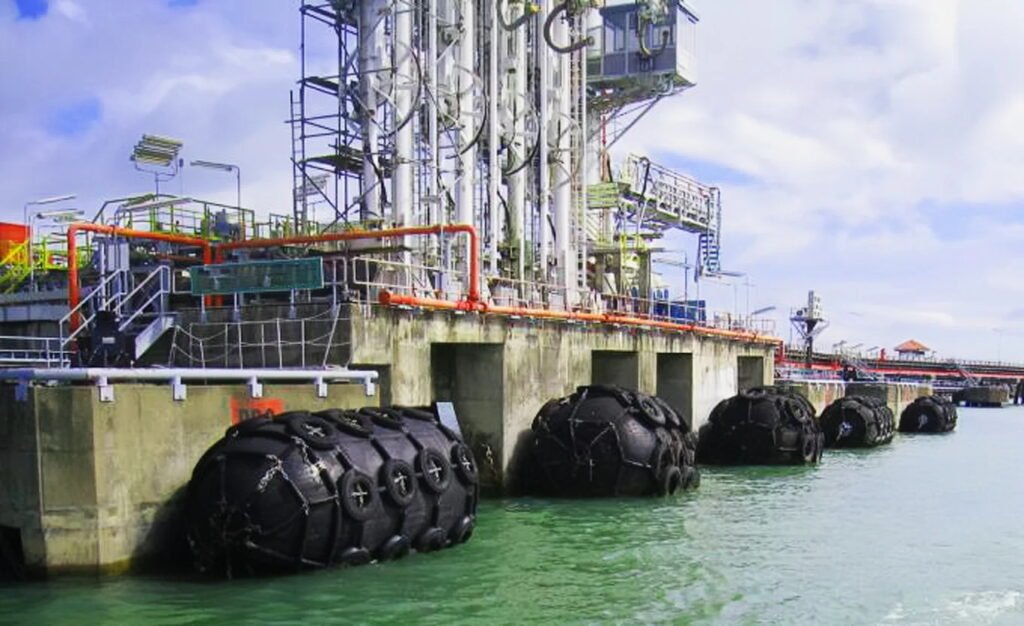
Floating pneumatic rubber fenders are inflatable cylindrical structures made from reinforced rubber layers. Inside, they are filled with compressed air, which provides the flexibility and cushioning effect that makes them highly effective in energy absorption.
They are widely used in ports, offshore terminals, and ship-to-ship operations. Their floating nature allows them to stay aligned with a vessel’s hull, no matter the tide level or the size of the ship. This makes them suitable for tankers, bulk carriers, container ships, and even naval vessels.
Key uses include:
- Berthing protection: Preventing hull damage when ships make contact with piers, jetties, or docks.
- Ship-to-ship transfers: Acting as a buffer during cargo or fuel transfer at sea.
- Temporary mooring: Offering flexibility for offshore projects and emergency situations.
Because they are portable and easy to install, pneumatic rubber fenders are considered one of the most versatile solutions in the marine industry.

Key Specifications and Technical Parameters
Understanding specifications is critical when selecting floating pneumatic rubber fenders. The most important parameters include:
- Size and Dimensions
- Standard diameters range from 0.5 m to 4.5 m, with lengths up to 9 m or more.
- Larger fenders can absorb more energy but require more space for deployment.
- Internal Pressure
- Low-pressure and high-pressure models are available.
- Working pressure usually ranges between 50 kPa and 80 kPa, depending on design.
- Correct pressure ensures reliable energy absorption and longer service life.
- Energy Absorption
- This is the most important performance metric. It measures how much impact energy the fender can absorb without exceeding its deformation limits.
- Manufacturers provide detailed charts for each fender size, which engineers use to match vessel displacement and berthing velocity.
- Reaction Force
- The force transmitted back to the vessel and berth during compression.
- A good fender balances high energy absorption with low reaction force to reduce stress on ship structures.
- Material Composition
- Outer layers are typically made from synthetic rubber blends with high resistance to weather, seawater, and UV exposure.
- Reinforced with strong tire cord layers to withstand repeated compression cycles.
- Operating Temperature Range
- Standard fenders can operate between -20°C and +60°C.
- Specialized models are available for extreme cold or hot climates.
These technical details help shipowners, port engineers, and procurement managers select the right fender for specific operations. Ignoring them can result in poor performance or safety risks.
How to Choose the Right Fender
When selecting floating pneumatic rubber fenders, consider the following factors:
- Vessel Size and Type: Match fender size to vessel displacement and hull structure.
- Berthing Conditions: Evaluate approach speed, angle of berthing, and frequency of operations.
- Water Depth and Tides: Ensure the fender can float freely without grounding during low tide.
- Operational Environment: Consider temperature, salinity, and potential exposure to sharp objects.
- Certification and Standards: Choose products tested to ISO or class society requirements for quality assurance.
By analyzing these factors, operators can avoid under-sizing or over-investing in unsuitable equipment.
Installation and Maintenance Guidelines
Proper installation and maintenance extend the service life of floating pneumatic rubber fenders.
- Installation: Secure with chains, shackles, or mooring ropes. Ensure clearance so the fender can move with the tide.
- Pressure Check: Inspect air pressure regularly using a calibrated gauge. Adjust to recommended levels.
- Surface Inspection: Look for cuts, abrasions, or abnormal deformation after each use.
- Cleaning: Remove marine growth or debris to prevent additional stress on the rubber surface.
- Repairs: Small punctures can often be patched, but serious damage may require professional servicing.
A well-maintained fender can last over ten years, depending on frequency of use and environmental conditions.
Common Problems and Solutions
- Air Leakage: Usually caused by valve issues or small punctures. Regular checks and patch kits solve minor leaks.
- Surface Damage: Prevent by using protective nets or tires around the fender.
- Excessive Deformation: Often linked to overpressure or improper size selection. Review specifications before replacement.
Conclusion
Floating pneumatic rubber fenders remain one of the most reliable and adaptable solutions for marine protection. By understanding their specifications and applying proper maintenance, operators can ensure safety, efficiency, and long-term cost savings. When in doubt, consult technical charts or speak with a trusted supplier to match the right fender to your operational needs.
FAQ
1. What are floating pneumatic rubber fenders used for?
They are mainly used to protect vessels and port structures during berthing and ship-to-ship transfers by absorbing collision energy.
2. How long do floating pneumatic rubber fenders last?
With proper maintenance, they can serve for 8–12 years, depending on usage frequency and environmental conditions.
3. Can floating pneumatic rubber fenders be repaired?
Yes. Small punctures and leaks can usually be patched, while severe damage may require professional repair or replacement.
4. How do I know which size fender to choose?
Refer to the manufacturer’s energy absorption charts, considering vessel displacement, approach speed, and berthing conditions.
5. Do floating pneumatic rubber fenders work in rough seas?
Yes. Because they float, they adapt to waves and tide changes, making them effective even in offshore and open-sea conditions.