




If you already know the basics of floating pneumatic rubber fenders, this guide will give you deeper knowledge. We will not just explain what they are, but show you how to choose, use, and maintain them in real operations. This way, you can make better decisions when you buy, install, or check these fenders.
Why Choose Floating Pneumatic Rubber Fenders?
These fenders are popular because they:
- Absorb high energy while giving low reaction force (safe for ships and quay walls).
- Float on water, so they work well even with large tide changes.
- Work in many conditions, such as ship-to-ship (STS) and ship-to-quay (STQ) operations.
- Are light and easy to transport compared with solid fenders.
This balance of safety, flexibility, and easy handling makes them the first choice for many ports and offshore projects.
Standards You Should Know
Floating pneumatic fenders follow ISO 17357. This standard explains how to test performance, pressure, and quality.
- High-pressure type and low-pressure type are the two main categories.
- When you buy, always ask the supplier for the ISO test report.
Key Factors in Selection
When choosing a fender, focus on three main points:
- Energy Absorption
The fender must absorb the energy from the ship when it berths. Engineers calculate this using ship speed and weight. The fender or fender group must handle more energy than this value. - Reaction Force
This is the force that pushes back on the ship and the quay. Too high reaction force can damage both. Always check the reaction force curve from the supplier. - Deflection (Compression)
Fenders compress under load. Normally they work at 40–60% compression. You must make sure the fender still performs well in your real tide and draft conditions.
Types of Outer Protection
To protect the rubber body, suppliers add outer nets or covers:
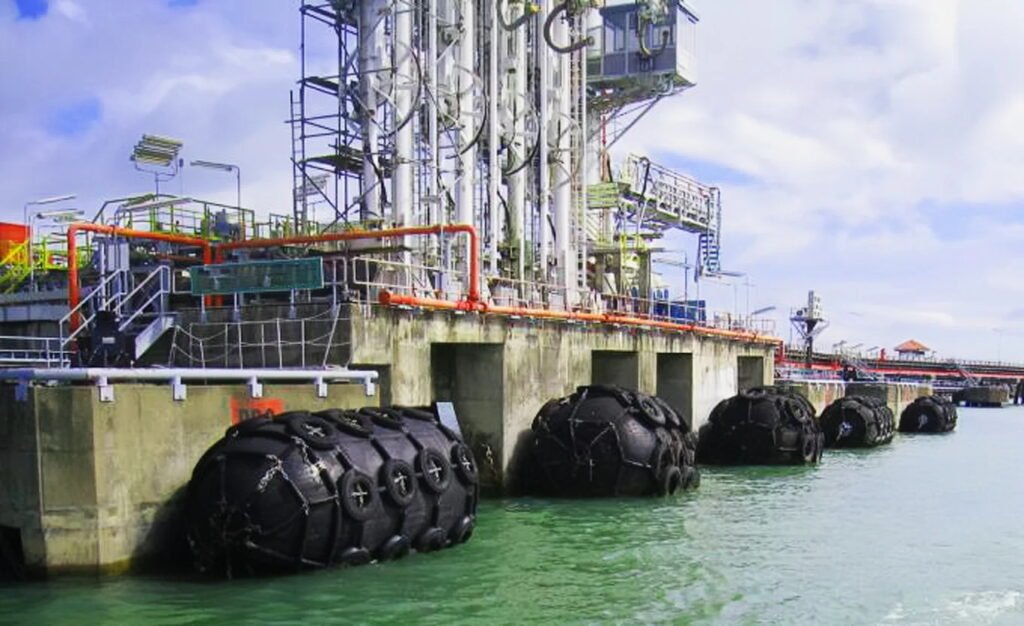
- Chain & Tyre Net – very strong, best for heavy and frequent use.
- Sling Type – lighter, easier to handle, but less protection.
- Ribbed Surface – simple and light, for moderate conditions.
Choose the type based on your operation: heavy ship-to-ship work needs strong nets, while lighter operations may use sling type.
Installation and Use
- Air Pressure: Always keep the fender at the correct pressure. Too much or too little changes performance and can cause damage.
- Mooring and Chains: Use strong, tested shackles, chains, or slings. Do not use weak or temporary fittings.
- First Test: When you first inflate the fender, record pressure and performance. Keep these records for later checks.
Maintenance
Good care will make your fenders last many years. Here are simple rules:
- Check pressure regularly (every few weeks or before each operation).
- Inspect nets, chains, and shackles for rust or damage.
- Look for cuts, cracks, or air leaks in the rubber body.
- Store fenders in a dry, cool place away from sharp objects and direct sun.
Small damage can often be repaired, but big cracks or bulges mean the fender should be replaced.
Common Problems
- Cuts or punctures from sharp ship parts → use chain and tyre nets to prevent this.
- Air leaks from valves or joints → check with soap water and repair quickly.
- Material aging after many years → replace if cracks or loss of pressure become frequent.
Buying and Acceptance Checklist
When you order fenders, always ask for:
- ISO 17357 certificate and test report.
- Performance curves (energy absorption vs compression, and reaction force vs compression).
- Net type, sling type, or accessories details.
- Factory test record and delivery inspection.
This will protect you from poor quality products.
Final Words
Floating pneumatic rubber fenders are simple to use but complex to choose correctly. Many buyers only look at size and price, but the real safety depends on energy absorption, reaction force, and ISO test reports.
If you ask the right questions and demand the right documents, your fenders will work safely and last longer.
FAQ — Simple Questions and Short Answers
Q1: What is a floating pneumatic rubber fender?
A: It is an inflatable rubber device. It floats on water and absorbs energy when a ship hits the quay or another ship.
Q2: What is the main advantage of this fender?
A: It gives high energy absorption and low reaction force. This protects ships and structures.
Q3: How do I choose the right size?
A: Use ship weight, ship speed at berth, and allowed reaction force. Ask a supplier or engineer to calculate energy needed.
Q4: How much air pressure should I use?
A: Use the pressure the supplier gives. Do not overfill. Check the pressure gauge often.
Q5: How often do I inspect the fender?
A: Inspect before each important use and do a full check every 3–6 months. Inspect more often if you use it a lot.
Q6: Can I repair small cuts?
A: Yes. Small cuts can often be patched. Big damage needs factory repair or replacement.
Q7: Which outer protection is best?
A: For heavy use, choose chain & tyre net. For light use, a sling or ribbed cover can work.
Q8: Do I need ISO test reports?
A: Yes. Ask for ISO 17357 test reports before you accept delivery.
Q9: How long will these fenders last?
A: Life depends on use and care. With good maintenance, they last many years. Replace them when they lose pressure often or show big cracks.
Q10: Can I use one fender for all ships?
A: No. Large ships need bigger or more fenders. Always match fender capacity to ship size and berthing speed.