


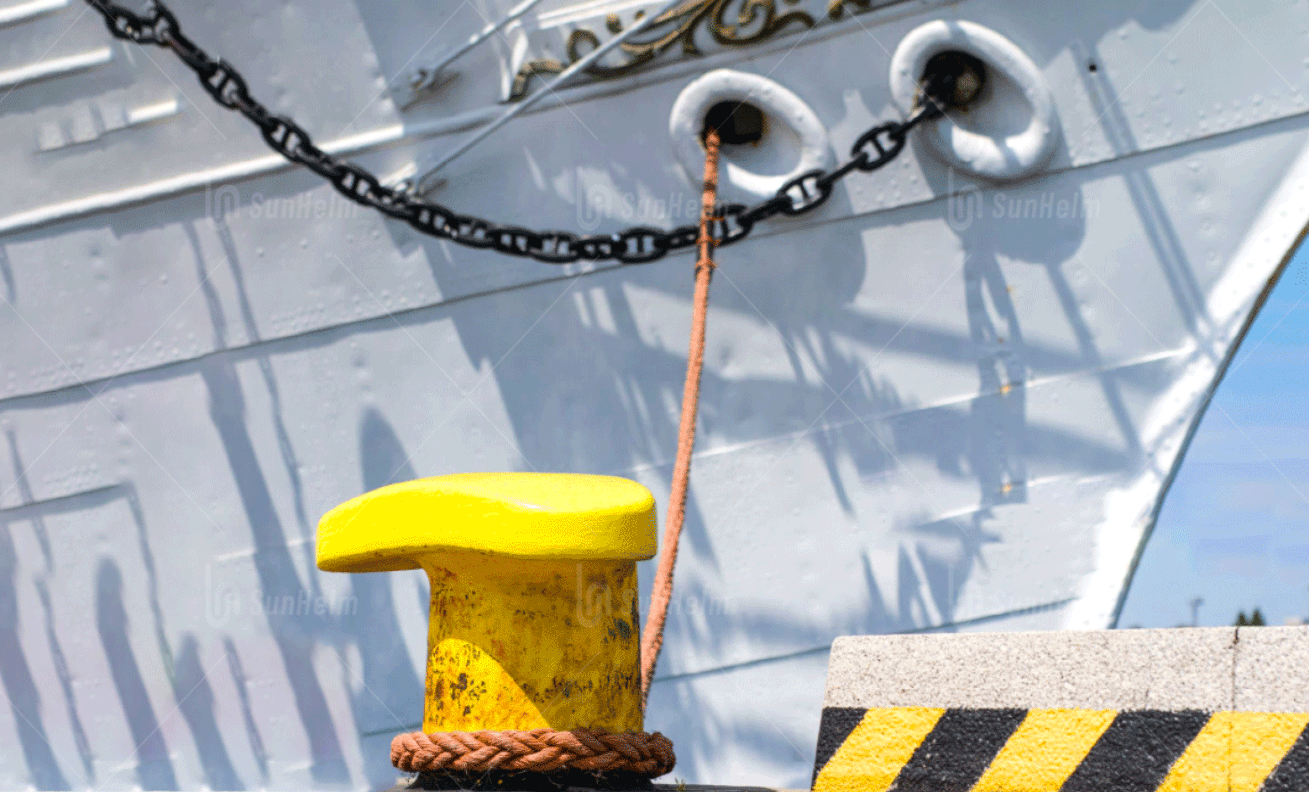


A sudden berth impact can cost a port tens of thousands in repairs and downtime. Choosing the right fender — one that absorbs energy, lasts for years, and keeps ships and quays safe — is not optional. Heavy duty foam filled fenders are designed exactly for that job.
What they are
Heavy duty foam filled fenders are solid, resilient fenders made from closed-cell foam inside a tough rubber skin. When a ship presses against the quay or another ship, the foam compresses and absorbs the energy. The rubber shell protects the foam from abrasion, UV and oil. These fenders float, resist water ingress, and keep their shape even after repeated impacts.
Keywords: Heavy duty foam filled fenders, foam filled fenders, foam fenders, foam floating fenders, marine foam fenders.
Why shipowners, terminal operators and berth designers choose them
- High energy absorption: They soak up a lot of impact energy in a compact size. That means you can protect bigger ships without giant fender panels.
- Durability: The rubber skin resists chafe, weather and marine growth. Inside, closed-cell foam won’t take on water even if the outer skin is cut.
- Low maintenance: Unlike some active systems, foam fenders need little upkeep. No pumps, no pressure checks — just inspect rubber and fittings.
- Safe flotation: They float reliably, which helps when used on floating berths, buoys, or as ship-to-ship fenders.
- Cost-effective over life cycle: Initial cost can be higher than simple tires or logs, but their lifespan and performance reduce long-term repair and downtime costs.
Typical uses and where they shine
Heavy duty foam filled fenders work well in many settings:
- Ro-ro and ferry berths where impacts are frequent.
- Container terminals handling large ships and high berthing forces.
- Oil & gas terminals and tanker berths that need reliable, robust protection.
- Ship-to-ship (STS) transfers and offshore loading where flotation and stability matter.
- Temporary or permanent fendering for floating docks, pontoons and buoys.
Design basics for berth planners
When you specify foam fenders, designers consider three main things:
- Energy and reaction force: Choose a fender that absorbs required energy while keeping reaction forces below what the ship’s hull and quay can tolerate.
- Size and spacing: Bigger fenders or closer spacing reduce reaction force and lower local stress on the quay.
- Compression stroke: Make sure the fender can compress enough without bottoming out — especially important for high freeboard ships.
A good rule: design for the most severe realistic scenario (max approach speed, biggest ship) and add a safety margin.
Installation and fittings
Heavy duty foam filled fenders usually attach to quays or vessel sides with steel brackets, chains, or special floating cradles. Pay attention to:
- Mounting strength: Anchor bolts and support structure must match the fender’s expected loads.
- Alignment: Fenders should sit at the correct height to meet the ship’s hull at the right point.
- Wear pads and chafe protection: Add sacrificial pads where chains or brackets rub.
Inspection and upkeep
- Visual check of rubber skin for deep cuts or severe abrasion.
- Check mounting hardware and replace corroded bolts.
- Ensure fender positions haven’t shifted.
- Wash off heavy grease or oil to prevent long-term degradation.
Inspections every 3–12 months are common; high-use berths need more frequent checks.
Pros and cons — practical view
Pros
- High energy absorption in a compact package.
- Low water ingress risk — foam core won’t sink.
- Long service life with minimal maintenance.
- Good for floating and fixed installations.
Cons
- Higher upfront cost than simple fenders (e.g., tires).
- Heavy-duty models are bulky; handling needs equipment.
- If outer skin is badly damaged, repair needs vulcanizing or replacement.
Comparing common alternatives
- Pneumatic fenders: Better for delicate ship hulls and larger compression strokes, but need pressure maintenance and are more vulnerable to punctures.
- Rubber cylinder fenders: Cheaper, robust, but lower energy absorption per unit size.
- Tire fenders: Very cheap and flexible, but inconsistent performance and high maintenance.
For many heavy-duty quay and terminal needs, foam filled fenders hit the sweet spot between performance, durability and low upkeep.
Cost perspective — initial vs life-cycle
Don’t buy on price alone. A cheaper fender can mean higher maintenance, earlier replacement, and more risk of berth or hull damage. Heavy duty foam filled fenders usually show better life-cycle economics because they:
- Require fewer replacements,
- Cut repair downtime,
- Reduce secondary damage to vessel hulls and quay walls.
Run a simple life-cycle estimate: initial cost + expected maintenance + downtime risk. In many cases the heavier-duty foam option is cheaper over 5–10 years.
FAQ
Q: Are foam filled fenders suitable for all ship sizes?
A: Yes — there are sizes and hardnesses for everything from small ferries to large containerships. Choose based on energy absorption needs and reaction force limits.
Q: Do foam fenders float if damaged?
A: Closed-cell foam cores won’t absorb water, so even with skin damage the core remains buoyant. Still, repair damaged outer skin quickly to avoid progressive wear.
Q: How long do heavy duty foam filled fenders last?
A: With normal use and routine checks, they often last many years — typically 5–15+ years depending on environment and impact frequency.
Q: Can I repair a torn outer skin?
A: Minor cuts can be patched. Major damage usually needs professional vulcanizing repairs or replacement of the shell.
Q: What’s the difference between foam filled and pneumatic fenders?
A: Foam fenders are solid inside (foam core), require little maintenance, and are rugged. Pneumatic fenders use air and give larger compression but need pressure checks and are more sensitive to punctures.
Final thought
For shipowners, terminal operators and berth designers who want a reliable, low-maintenance, high-performance solution, heavy duty foam filled fenders are a smart choice. They protect ships and infrastructure, reduce long-term costs, and fit many berth types. When you plan your next berth upgrade, factor in life-cycle cost, mounting design and the right fender size — and you’ll avoid the bigger bill that comes from underestimating berth impacts.
If you want, I can draft a short specification table (energy absorption, reaction force, dimensions) for common ship sizes to help with your berth design.
You have not enough Humanizer words left. Upgrade your Surfer plan.