

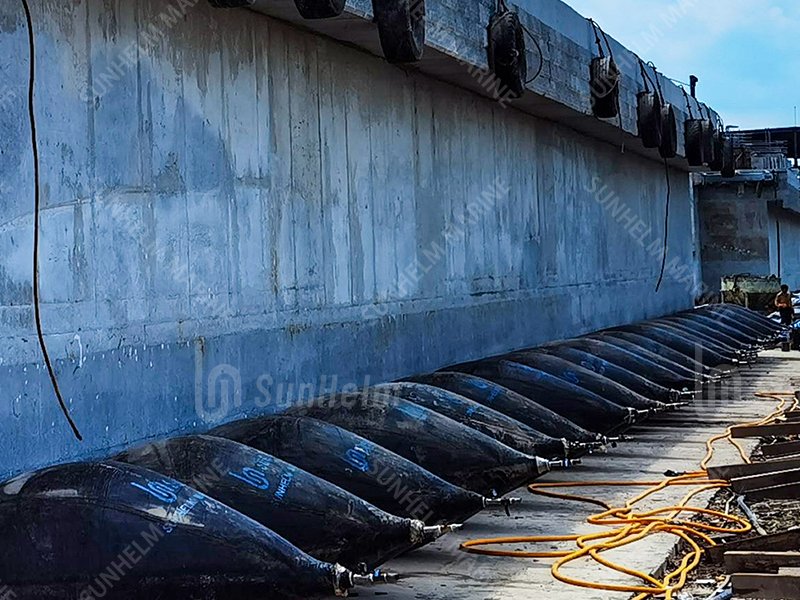
When people hear “marine airbags,” they usually think of ship launching. That’s true, but these versatile tools can do much more. At Sunhelmmarine, we see shipyards, salvage teams, and offshore engineers using airbags in creative ways that save time, reduce costs, and make operations safer. This article explores the main applications of marine airbags beyond launching ships.
Marine Airbags Overview
A marine airbag is a strong, reinforced rubber balloon designed to withstand heavy loads and pressure. By inflating it with air, you create a flexible tool that provides buoyancy, cushioning, and support. Unlike large machines, airbags are portable, reusable, and cost-effective. They adapt to different environments—onshore, nearshore, or offshore.
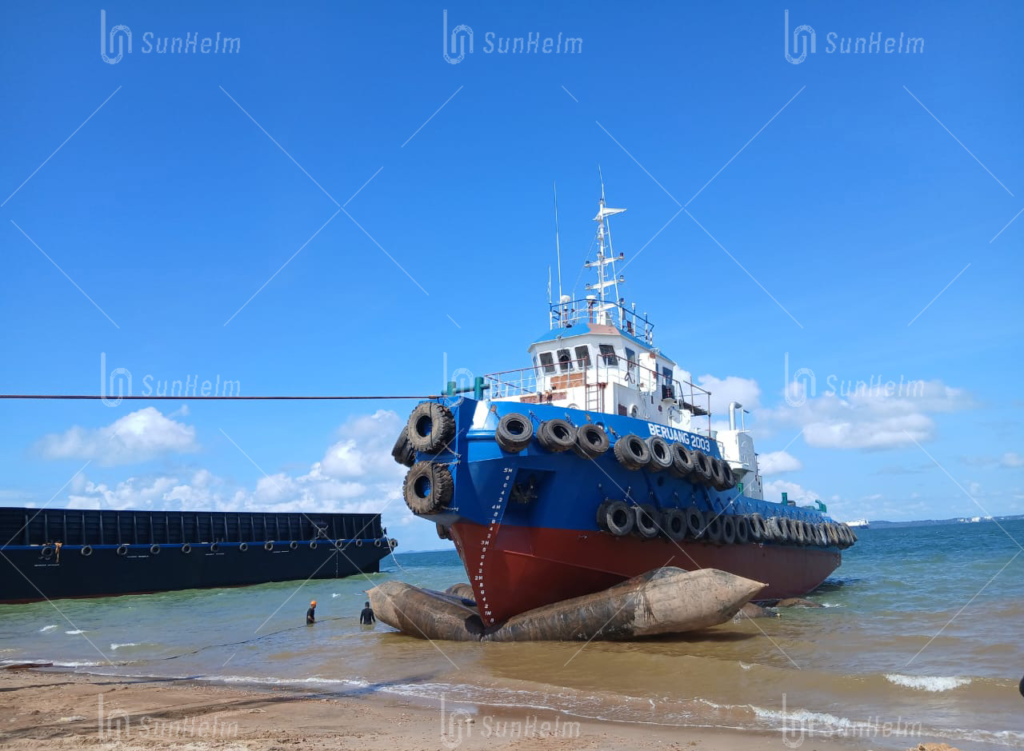
Common Applications Beyond Ship Launching
Marine airbags can support many types of operations:
- Salvage and Refloating of stranded or sunken vessels.
- Hauling or Landing Ships for repair or inspection.
- Heavy Load Transportation on land by rolling and shifting.
- Bridge and Structure Launching where prefabricated parts need safe movement into water.
- Pipeline and Subsea Installation as temporary buoyancy or support.
- Lifting Caissons and Port Maintenance in dock works.
- Emergency Rescue and Flood Control in disaster situations.
Salvage and Refloating
When a ship runs aground or sinks partly underwater, time and safety are critical. Marine airbags provide extra buoyancy under the hull. Teams place them beneath or alongside the vessel, then inflate them gradually. This controlled lift reduces strain on the hull and helps the vessel float again.
Compared with heavy cranes or pontoons, airbags are faster to deploy and easier to transport. They work well in shallow water or remote areas where large salvage equipment cannot reach.
Hauling and Landing Ships
Shipyards often need to bring vessels ashore for repair, inspection, or painting. Marine airbags make this process flexible. Crews place airbags under the hull, inflate them, and roll the vessel safely up a ramp or onto dry ground.
This method avoids building expensive slipways or using massive lifting cranes. It also allows temporary or mobile repair sites, which is valuable in regions with limited infrastructure.
Heavy Load Transportation on Land
Airbags are not limited to ships. They can also move heavy industrial equipment, prefabricated modules, or large metal structures across a yard. Instead of relying on steel rollers, airbags act as soft rolling cushions.
By inflating and deflating them in sequence, teams can shift extremely heavy objects smoothly. This reduces friction, protects the structure, and lowers manpower needs.
Bridge and Structure Launching
Prefabricated bridge sections or large concrete parts often need to be moved into water for installation. Airbags act as floating supports. By adjusting air pressure, engineers can control buoyancy and position the structure accurately.
This approach lowers costs compared with floating cranes, while still giving safe and reliable handling.
Pipeline and Subsea Installation
Marine airbags can help during offshore pipeline laying and underwater equipment installation. They provide temporary lift and support so teams can position pipelines or modules without damage.
The flexibility of airbags allows them to adapt to uneven seabeds or tight working conditions. They are especially useful when traditional buoyancy tanks are too heavy or expensive.
Lifting Caissons and Port Maintenance
In port construction, caissons or other concrete blocks must be lifted and placed with precision. Marine airbags can assist by providing buoyancy or acting as cushions during positioning.
They make the process faster and more economical than relying only on floating cranes. Port authorities and contractors often choose airbags as an alternative method to handle maintenance projects.
Emergency Rescue and Flood Control
In disaster zones, speed and adaptability matter. Marine airbags can serve as temporary lifting tools, floating platforms, or even flood barriers. They help rescue teams move debris, create emergency passages, or stabilize damaged structures.
Because they are light and portable, airbags can be quickly transported and deployed in urgent situations.
Design and Selection Tips
Choosing the right airbag depends on the job. Engineers must consider:
- Required buoyancy or load capacity.
- Airbag size and length relative to the object.
- Operating environment such as water depth, temperature, or seabed conditions.
- Material strength and durability against wear, puncture, and seawater.
- Safety margin with extra layers and controlled pressure.
By matching these factors, users can make sure the airbags perform reliably and safely.
Safety Practices
Even though airbags are simple to use, safety is vital:
- Inspect each airbag for leaks or damage before use.
- Inflate step by step and monitor pressure constantly.
- Secure airbags to prevent slipping or sudden movement.
- Keep workers clear of the load path during lifting or rolling.
- Prepare an emergency release plan in case of overpressure.
Following these rules reduces risks and protects both people and equipment.
Maintenance and Service Life
With proper care, a marine airbag can last for many years. Best practices include:
- Cleaning with fresh water after use.
- Storing in a cool, dry place away from sunlight.
- Repairing small cuts with special rubber patches.
- Checking valves and fittings regularly.
Monitoring the number of uses and pressure cycles helps determine when to retire an old airbag for safety.
FAQ: Marine Airbags
1. How deep can marine airbags work?
Most airbags perform well in shallow to medium-depth operations, usually within 25 meters. Beyond that, water pressure becomes too high, and special designs are required.
2. How many times can one airbag be reused?
With proper care, a high-quality airbag can be reused hundreds of times over several years. Service life depends on handling, storage, and working conditions.
3. Can airbags work in cold or hot climates?
Yes. Modern airbags are built with rubber compounds that resist cracking in low temperatures and softening in heat. Always confirm the temperature rating with the supplier.
4. What is the maximum load one airbag can handle?
It depends on size and construction. Large airbags can safely support hundreds of tons when used correctly and combined in groups.
5. Can airbags replace cranes completely?
Not always. Airbags are excellent for rolling, floating, or lifting in flexible situations. However, cranes are still required for vertical lifts or highly precise placements.
6. How do I choose the right airbag size?
Consider the object’s weight, shape, and required buoyancy. Suppliers like Sunhelmmarine can provide calculations and recommendations for safe selection.
7. Are marine airbags safe to use?
Yes, when operated properly. The key is following safety practices: correct inflation, steady pressure monitoring, and keeping workers clear of the working area.