

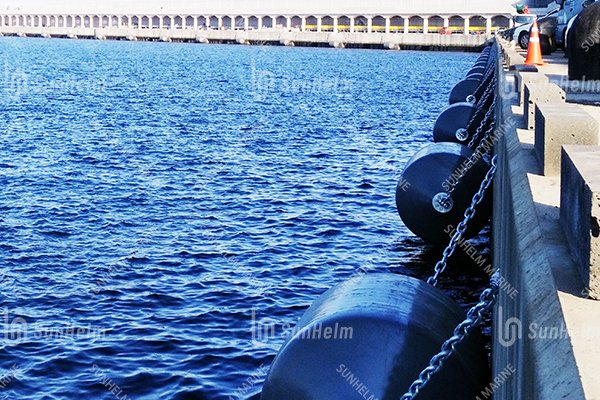
Foam fenders play a quiet but important role in Navy and Coast Guard operations. They protect ships, small boats, piers, and people during many daily tasks. Because foam fenders are strong, light, and always buoyant, crews like using them in tough marine conditions. In this article, we look at the most common ways the Navy and Coast Guard use foam fenders and why they are such a practical choice.
What Is a Foam Fender?
A foam fender is a solid, closed-cell foam core covered with a tough outer skin, usually polyurethane. Unlike pneumatic fenders, foam fenders don’t need inflation. They float naturally, absorb strong impacts, and handle rough conditions without much maintenance. These features make them popular in military operations where reliability matters.
Why the Navy and Coast Guard Use Foam Fenders
Foam fenders are widely used because they offer:
- High energy absorption during docking and close contact
- Low maintenance, with no valves or air pressure to manage
- Buoyancy, even if the skin is damaged
- Durability in saltwater, UV, and rough handling
- Easy handling and fast deployment on smaller boats
Common Foam Fender Applications
1. Ship-to-Ship Operations
The Navy often performs close-contact operations such as replenishment at sea, boarding missions, and escort tasks. Foam fenders reduce the chance of hull damage when two vessels operate side by side. They are also helpful during training drills when ships repeatedly make contact at low speed.
2. Pier and Base Protection
Foam fenders are widely used on naval bases and Coast Guard stations. Many piers—especially in remote or exposed areas—use foam fenders as their primary protection. Crews like them because they can install, remove, or replace them quickly. Their tough skin handles constant rubbing from patrol boats and cutters.
3. Small Boat and Cutter Mooring
Coast Guard cutters, RHIBs, and fast patrol boats moor and depart many times a day. Foam fenders help these small craft avoid dents and scratches, especially in tight spaces. Because foam fenders are light, crew members can move them around easily and deploy them within seconds during boarding or docking.
4. Search and Rescue (SAR) Missions
Foam fenders are useful in SAR operations because they float, soften impact, and provide quick protection for damaged vessels. Crews may use foam pads or cylindrical fenders as temporary flotation support or as safe contact points when approaching survivors or unstable boats.
5. Cold-Weather and Ice Operations
Some naval regions operate in icy waters. Foam fenders with reinforced outer skins handle low temperatures well and resist cuts from ice chunks. They are also useful when ships contact frozen docks or ice-covered piers.
6. Boarding, Interdiction, and Security Missions
During high-speed interdictions, interceptors and small Coast Guard craft may bump against targets or boarding platforms. Foam fenders protect both boats and personnel during these quick maneuvers. Some units even mount hidden or sacrificial foam panels to reduce damage during contact.
7. Temporary Work Zones, Repair, and Salvage
When crews patch hulls, tow damaged ships, or work in tight areas, foam blocks are used as soft buffers. They create safe working space between boats, barges, and repair platforms. They also help stabilize vessels in emergency situations.
Choosing the Right Foam Fender
When choosing foam fenders for Navy or Coast Guard use, teams consider:
- Vessel size and approach speed
- Required energy absorption
- Skin durability and abrasion resistance
- Temperature and environmental conditions
- Handling, weight, and storage space
A well-selected foam fender can last years with very little maintenance.
Conclusion
Foam fenders may look simple, but they support many essential Navy and Coast Guard missions. From mooring and docking to SAR and high-speed boarding, foam fenders help protect vessels, pier structures, and the crews who operate them. Their durability, buoyancy, and easy handling make them a reliable choice for military operations in every environment.
FAQ
1. What do the Navy use foam fenders for?
They use foam fenders for ship-to-ship contact, docking, pier protection, and small craft operations.
2. Are foam fenders good for Coast Guard cutters?
Yes. They are light, strong, and fast to deploy, which is perfect for daily cutter operations.
3. Do foam fenders work in icy or cold waters?
Yes. With the right outer skin, foam fenders stay flexible and resist ice damage.
4. How are foam fenders different from pneumatic fenders?
Foam fenders don’t require inflation and can’t lose air. They offer simple handling but slightly lower energy absorption than large pneumatic fenders.
5. Can foam fenders be repaired easily?
Yes. Many models can be patched or resurfaced in the field with simple tools.