

Deep ocean buoys are usually tethered using a long mooring system made of heavy anchors, strong lines, and underwater flotation devices. The system must survive waves, ocean currents, storms, and years of nonstop movement in one of the harshest environments on Earth.
At first glance, a deep ocean buoy may look simple. You see a floating object on the water and assume it is just tied down with a rope. In reality, the engineering behind it is far more complex.
Some deep ocean moorings reach several miles below the surface. They must hold scientific instruments in position while the ocean constantly pushes and pulls against them.
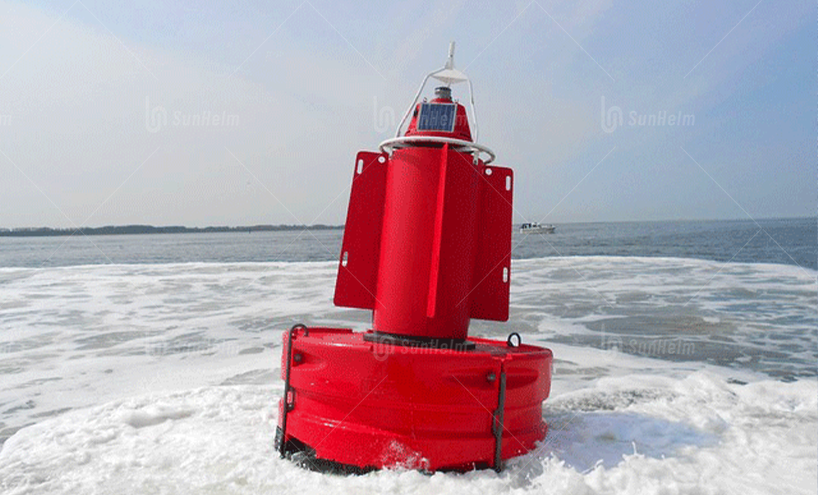
Why Deep Ocean Buoys Need Special Mooring Systems
The open ocean is always moving.
Waves hit the buoy day and night. Currents pull the system sideways. Storms create huge shock loads. Saltwater slowly damages materials over time.
A normal rope tied to a heavy object would not last very long.
Engineers design mooring systems to balance several forces at once:
- Downward weight from anchors
- Upward pull from flotation devices
- Sideways force from currents
- Repeated motion from waves
The goal is to keep the buoy stable without letting the mooring line become loose or drift too far away.
How the Buoy Is Anchored to the Ocean Floor
Most deep ocean buoys are not attached directly to the seabed like a pole stuck into the ground.
Instead, they are held in place by extremely heavy anchors.
These anchors can include:
- Steel blocks
- Concrete structures
- Large metal weights
- Even old train wheels
Old train wheels are sometimes used because they are extremely heavy, durable, and widely available. Their weight creates what engineers call negative buoyancy, which helps pull the mooring system downward.
In very deep water, the anchor may sit thousands of feet below the surface.
Why Glass Spheres Are Used Underwater
One of the most important parts of a deep ocean mooring system is the flotation section.
Engineers often use hollow glass spheres protected inside hard plastic shells. These floats create positive buoyancy, meaning they pull upward in the water.
This upward force helps keep the mooring line tight.
Without flotation, the line could sag too much or move around in strong currents. A loose line can cause instruments to drift away from their target depth.
The glass spheres also help support scientific equipment placed underwater. Some sensors must stay at very specific depths to collect accurate data.
This balance between heavy anchors below and flotation above is what keeps the entire system stable.
What Materials Are Used for Mooring Lines?
The mooring line itself is one of the most critical parts of the system.
Different materials are used depending on water depth, cost, strength, and ocean conditions.
Steel Wire
Steel wire rope is very strong and handles heavy loads well. It is commonly used in deep-water systems.
However, steel can corrode in seawater over time.
Nylon Rope
Nylon is flexible and stretches under load. This stretch helps absorb shock from waves and sudden movement.
Polypropylene Rope
Polypropylene is lightweight and relatively inexpensive. Some versions can float in water.
Kevlar Rope
Kevlar is extremely strong and has very little stretch. It performs well under heavy tension.
But there is one major problem: cost.
A deep ocean mooring may require two or even three miles of line. Using Kevlar for the entire system can become very expensive, so many operators choose more affordable materials instead.
Why Mooring Lines Sometimes Fail
Even well-designed mooring systems can fail.
In the ocean, equipment faces nonstop stress every day. Over time, mooring lines can weaken and eventually break apart.
Common causes include:
- Corrosion
- Abrasion
- Material fatigue
- Storm loading
- Constant stretching
Strong currents can also place huge sideways forces on the system.
When a mooring line parts, the buoy may drift away and valuable scientific equipment can be lost.
Because of this, engineers carefully inspect and test mooring systems before deployment.
Real Ocean Conditions Make Everything Harder
Ocean conditions are often tougher than expected.
Marine organisms attach themselves to ropes and instruments. This process is called biofouling. Over time, the added weight changes how the mooring behaves in the water.
Currents can also change direction and speed throughout the year.
Deploying a deep ocean buoy is a major operation that may involve large ships, cranes, winches, and trained marine crews.
Maintenance is expensive as well. Recovering a damaged mooring from deep water can take days or even weeks.
Conclusion
Deep ocean buoys stay in place because of a carefully balanced mooring system. Heavy anchors pull downward while underwater flotation devices pull upward. Strong lines connect everything together and help the system survive years in rough ocean conditions.
Although the idea sounds simple, deep ocean tethering is actually a difficult engineering challenge. Every part of the system must handle pressure, motion, saltwater, and constant stress far from shore.
That is why modern ocean moorings are designed with such careful attention to weight, buoyancy, and long-term durability.
FAQ
How deep can ocean buoy moorings go?
Some deep ocean moorings extend several miles below the surface. Scientific buoys are often placed in very deep parts of the ocean.
Why are glass spheres used in mooring systems?
Glass spheres provide strong flotation while resisting deep-water pressure. The hard plastic outer shell helps protect them from damage.
Do deep ocean buoy lines ever break?
Yes. Mooring lines can fail because of storms, corrosion, abrasion, or long-term fatigue.
Why not use chains for the entire mooring?
Chains are extremely heavy. In deep water, using only chain would make the system difficult and expensive to deploy.
Is Kevlar the best material for mooring lines?
Kevlar is very strong and lightweight, but it is also expensive. Many deep ocean systems use cheaper materials because the lines can be several miles long.
How long can a deep ocean buoy stay deployed?
Some buoy systems remain in the ocean for months or even years before maintenance or replacement is needed.