

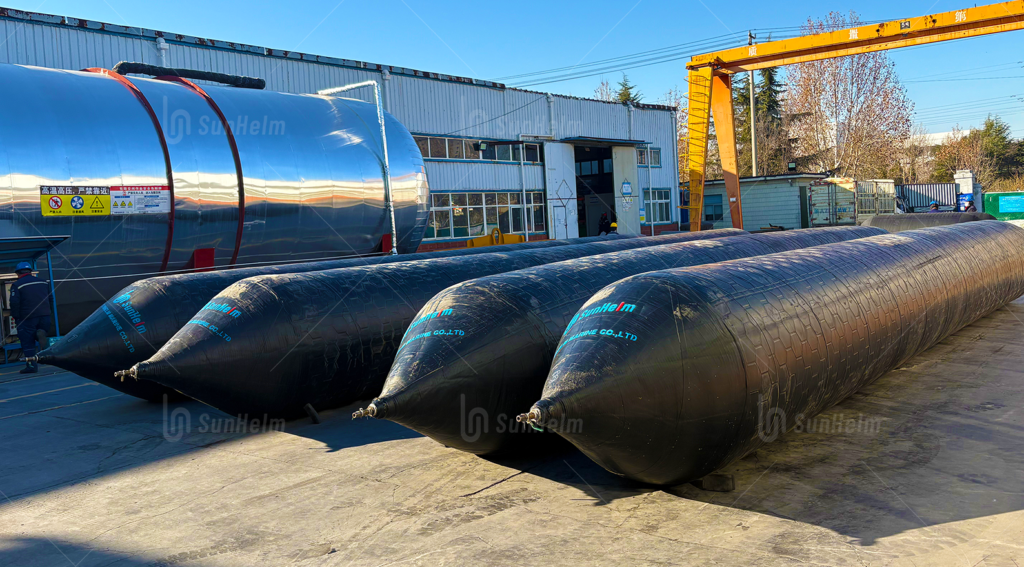
Ship launching airbags have become one of the most widely used methods for launching and landing vessels. They offer a flexible, cost-effective solution for shipyards, especially when traditional slipways or dry docks are unavailable.
However, because these airbags operate under pressure and carry extremely heavy loads, some people worry about a serious question:
Can ship launching airbags explode?
The short answer is yes—but under normal operating conditions, such failures are rare. Most airbag accidents are caused by incorrect use, poor maintenance, overload, or low-quality products rather than sudden, unpredictable failures.
Understanding the causes of airbag failure is the first step toward preventing it. In this article, we will explain the common risks and practical ways to keep ship launching operations safe.
Why Do Ship Launching Airbags Fail?
Ship launching airbags are designed to support and move vessels weighing hundreds or even thousands of tons. When used correctly, they are highly reliable. Problems usually occur when safety procedures are ignored.
Overloading the Airbags
One of the most common causes of airbag failure is overload.
If the vessel weight is underestimated, the selected airbags may not have enough carrying capacity. In some cases, shipyards use too few airbags or place them too far apart, causing excessive stress on individual units.
When the load exceeds the design limit, the rubber layers and reinforcement cords may become damaged, increasing the risk of failure.
Excessive Inflation Pressure
Every airbag has a recommended working pressure.
Inflating beyond this limit can place unnecessary stress on the structure of the airbag. Pressure can also increase unexpectedly when temperatures rise during hot weather.
Using an inaccurate pressure gauge or failing to monitor pressure regularly can create dangerous conditions.
Mechanical Damage
Ship launching airbags are made from strong rubber, but they are not indestructible.
Sharp welding points, rough steel edges, metal debris, or concrete surfaces can cut or puncture the outer rubber layer. Even a small damaged area can weaken the airbag and lead to failure under heavy loads.
Aging and Wear
Like any rubber product, marine airbags gradually age over time.
Long exposure to sunlight, harsh weather, saltwater, and repeated use can reduce the strength of the rubber. Cracks, hardening, or surface damage are signs that an airbag may need inspection or replacement.
Poor Manufacturing Quality
Not all ship launching airbags are manufactured to the same standard.
Low-quality products may contain fewer reinforcement layers, weaker materials, or inconsistent production quality. These defects may not be visible from the outside but can reduce safety during operation.
Warning Signs Before an Airbag Failure
In many cases, airbags show signs of trouble before a serious accident occurs.
Operators should pay attention to:
- Unusual bulges on the airbag surface
- Visible cracks in the rubber
- Rapid pressure loss
- Uneven deformation
- Deep abrasion marks
- Unusual noises during operation
If any of these signs appear, the launching process should stop immediately until the issue is investigated.
Choose the Right Airbags for the Job
Selecting the correct airbag is one of the most important safety decisions.
Calculate Vessel Weight Accurately
Never rely on estimates alone.
The vessel’s launching weight should include the hull, equipment, fuel, ballast, and any other significant loads. Accurate calculations help determine the number and size of airbags required.
Select the Proper Dimensions
Airbag diameter, length, and working pressure must match the vessel and launching conditions.
Using airbags that are too small can increase stress and reduce safety margins.
Maintain a Safety Margin
Good engineering practice always includes extra capacity beyond the expected working load.
A reasonable safety margin helps absorb unexpected forces during launching and reduces the chance of overloading.
Why Safety Factor Matters
When discussing ship launching airbag safety, one important term is the safety factor.
The safety factor compares the airbag’s failure load to its normal working load. A higher safety factor means the airbag can withstand greater unexpected forces before reaching its limit.
For example, Sunhelm Marine ship launching airbags are designed with a 4.5 safety factor. This means the theoretical failure load is approximately 4.5 times the rated working load.
This additional safety margin helps protect against:
- Load fluctuations
- Dynamic launching forces
- Minor operational errors
- Uneven load distribution
It is important to remember that a higher safety factor does not mean operators should overload the airbags. Instead, it provides an extra layer of protection when normal operating conditions change unexpectedly.
Control Inflation Pressure Carefully
Proper pressure management is essential for safe operations.
Follow Manufacturer Guidelines
Always inflate airbags according to the recommended working pressure.
Use Reliable Pressure Gauges
Pressure measuring equipment should be regularly checked and calibrated to ensure accurate readings.
Inflate Gradually
Inflating airbags in stages allows operators to monitor pressure changes and identify problems before reaching full pressure.
Monitor Temperature Changes
Air pressure naturally increases as temperature rises. During hot weather, pressure checks should be performed more frequently.
Perform Inspections Before Every Launch
A thorough inspection can prevent many accidents.
Before launching a vessel, operators should:
- Check the entire airbag surface
- Inspect valves and fittings
- Verify inflation pressure
- Remove sharp objects from the launch path
- Confirm proper airbag spacing
- Ensure all airbags are positioned correctly
A few minutes spent on inspection can prevent costly delays and equipment damage.
Maintain Airbags Properly
Regular maintenance extends service life and improves safety.
Keep Airbags Clean
Remove dirt, oil, salt, and debris after use.
Store Them Correctly
Store airbags in a cool, dry area away from direct sunlight and heat sources.
Check for Air Leaks
Periodic leak testing helps identify small problems before they become major issues.
Record Maintenance History
Keeping maintenance records makes it easier to track airbag condition and schedule replacements when necessary.
Monitor Operations During Launching
Safety does not end once the vessel starts moving.
During the launching process:
- Assign trained personnel to monitor operations
- Watch for abnormal airbag movement
- Check pressure readings regularly
- Observe vessel alignment
- Prepare spare airbags if needed
If any abnormal condition develops, operations should stop immediately until the cause is identified.
Final Thoughts
Ship launching airbag explosions are not random events. In most cases, they are the result of overload, excessive pressure, mechanical damage, poor maintenance, or low-quality equipment.
Fortunately, these risks can be greatly reduced through proper planning, correct airbag selection, regular inspections, and careful operation.
Choosing high-quality ship launching airbags also plays an important role. Products designed with a strong safety margin, such as Sunhelm Marine ship launching airbags with a 4.5 safety factor, provide additional protection during demanding launching operations.
Safe ship launching begins long before the vessel enters the water. With the right equipment and proper procedures, shipyards can significantly reduce risks and complete launching projects safely and efficiently.